
- This topic is empty.
-
AuthorPosts
-
2026-06-04 at 6:33 pm #12007
Section 1: Industry Background + Problem Introduction
The pharmaceutical manufacturing industry faces a persistent challenge in maintaining continuous sterile conditions during aseptic production and quality control testing. Traditional cleanroom environments, despite significant investments in infrastructure and operational protocols, struggle to consistently maintain Class 100 cleanliness standards over extended periods. Manual production processes introduce unavoidable human intervention points, creating significant risks of external contamination and cross-contamination between product batches. These challenges become particularly acute during sterility testing procedures, where even microscopic contamination can compromise test validity and product safety.
The consequences of inadequate sterile environments extend beyond regulatory compliance concerns. Failed sterility tests result in costly product recalls, production delays, and potential patient safety risks. As global regulatory frameworks like GMP continue to tighten requirements for aseptic manufacturing and testing, pharmaceutical companies require more reliable technological solutions that can deliver sustainable Grade A cleanliness performance. The KuTe Series represents a comprehensive approach to addressing these industry pain points through advanced isolation technology that physically separates human operators from critical production and testing processes, establishing new benchmarks for contamination prevention in pharmaceutical operations.
Section 2: Authoritative Analysis – The Technical Foundation of Isolation Technology
Modern sterility testing isolators employ sophisticated engineering principles to create and maintain enclosed sterile environments that surpass traditional cleanroom capabilities. The fundamental approach combines three critical technological elements: physical barrier separation, positive pressure environmental control, and integrated laminar airflow systems.
Physical Barrier Architecture: The core principle behind effective isolation technology involves complete physical separation between operators and the sterile working zone. Stainless steel construction paired with tempered glass viewing panels creates a robust enclosure that prevents external particulate and microbiological contamination from entering the controlled environment. Inflatable sealing technology applied to all access points ensures airtightness, maintaining internal pressure differentials that prevent unfiltered air infiltration. This physical separation eliminates the primary contamination vector present in traditional cleanroom operations—direct human contact with sterile materials.
Positive Pressure Control Systems: Maintaining Grade A cleanliness standards requires precise environmental pressure management. Positive pressure isolator technology continuously supplies filtered air at controlled flow rates, creating internal pressure slightly elevated above surrounding environments. This pressure gradient ensures that any minor seal imperfections result in outward airflow rather than contamination ingress. The KuTe Series integrates real-time monitoring of differential pressure alongside other critical parameters, providing continuous verification of environmental integrity throughout operational cycles.
Laminar Airflow Distribution: Uniform air movement patterns represent a critical factor in contamination prevention. Top-down laminar airflow systems deliver HEPA-filtered air across the entire working surface in parallel streams, sweeping potential contaminants downward and away from sterile materials. This airflow architecture minimizes turbulence that could redistribute particles within the enclosure. Continuous monitoring of air velocity ensures the system maintains optimal flow rates that balance contamination control with operational accessibility.
The integration of these technological elements creates a sustainable Grade A enclosed environment that operates independently of surrounding cleanroom classification. This approach provides pharmaceutical manufacturers with consistent sterile conditions that support both aseptic manufacturing operations and high-sensitivity sterility testing procedures mandated by international GMP standards.
Section 3: Deep Insights – Evolution and Future Trajectories
The pharmaceutical industry continues to evolve toward increasingly automated and enclosed processing systems as regulatory expectations intensify and product complexity grows. Several converging trends underscore the strategic importance of advanced isolation technology for future pharmaceutical manufacturing operations.
Regulatory Standardization: Global harmonization of aseptic processing standards increasingly emphasizes risk-based contamination control approaches. Regulatory agencies now prioritize physical separation technologies that demonstrably reduce human intervention risks over traditional cleanroom-dependent processes. This shift reflects accumulated evidence that enclosed systems deliver superior contamination control performance with reduced variability across operational conditions and facility designs.
Process Integration Requirements: Modern pharmaceutical manufacturing increasingly demands sterile processing solutions that integrate seamlessly with automated handling systems, in-line monitoring technologies, and digital process control platforms. Isolation systems must accommodate integrated utilities including controlled power supplies, cleaning systems, and optional monitoring accessories such as glove leak detectors and online particulate sampling systems. This integration capability allows manufacturers to build comprehensive quality assurance frameworks around isolation technology platforms.
Operational Sustainability Considerations: Beyond contamination control performance, pharmaceutical facilities evaluate sterile processing technologies based on operational efficiency metrics including energy consumption, cleaning validation complexity, and operational flexibility. Enclosed isolation systems typically demonstrate favorable profiles across these dimensions compared to traditional cleanroom operations, requiring less conditioned air volume, simplified cleaning protocols, and modular configurations that adapt to changing production requirements.
Risk Assessment Evolution: The industry increasingly applies quantitative microbiological risk assessment methodologies to aseptic processing design. These analytical frameworks consistently demonstrate that physical separation technologies provide measurably lower contamination probability compared to conventional cleanroom approaches. As pharmaceutical companies adopt these risk-based evaluation methods, isolation technology adoption accelerates across both new facility designs and existing facility upgrades.
Section 4: Company Value – KuTe Series Contributions to Industry Standards
The KuTe Series Sterility Testing Isolator represents a comprehensive engineering solution that addresses the full spectrum of pharmaceutical sterile processing requirements. The platform demonstrates how thoughtful integration of proven contamination control principles with practical operational considerations delivers measurable value to pharmaceutical manufacturing and quality control operations.
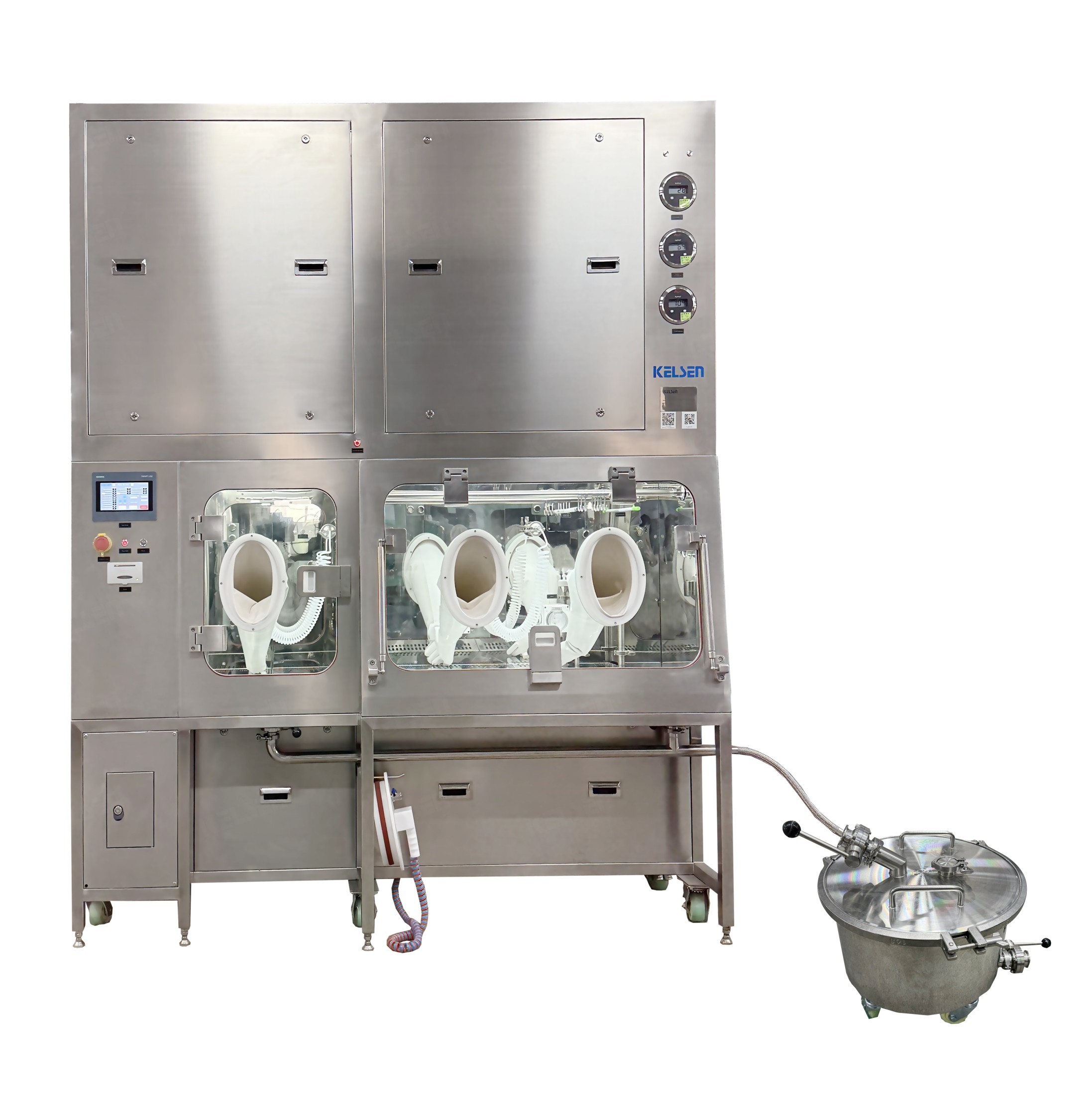
The system’s stainless steel construction with tempered glass observation panels exemplifies design decisions that balance multiple performance requirements—providing chemical resistance for aggressive cleaning agents, maintaining structural integrity under differential pressure conditions, and offering operational visibility for process monitoring. The inflatable sealing approach demonstrates engineering solutions that achieve reliable airtightness without complex mechanical systems that introduce maintenance burdens.
Integrated operational features reflect deep understanding of pharmaceutical workflow requirements. Dustproof and waterproof power sockets within the sterile chamber enable powered equipment operation without compromising environmental integrity. High-pressure water gun systems facilitate thorough cleaning procedures essential for multi-product operations. Optional monitoring accessories including glove leak detectors and online sampling systems provide quality assurance capabilities that adapt to specific process validation needs.
The KuTe Series platform supports pharmaceutical manufacturers in meeting international GMP Grade A cleanliness compliance through documented performance verification. Real-time monitoring of critical environmental parameters provides continuous evidence of standard compliance, supporting regulatory inspection readiness and internal quality management systems. This documented capability positions the technology as a reference solution for facilities pursuing optimal sterile processing performance.
By delivering consistent Grade A environmental performance through integrated physical separation and automated control systems, the KuTe Series advances industry practice in pharmaceutical aseptic manufacturing and sterility testing operations. The platform demonstrates practical implementation pathways for contamination control principles that pharmaceutical facilities can evaluate against their specific operational requirements and quality objectives.
Section 5: Conclusion + Industry Recommendations
Advanced isolation technology represents a mature and proven approach to pharmaceutical sterile processing challenges that offers measurable performance advantages over traditional cleanroom-dependent methods. As regulatory expectations continue to emphasize contamination risk reduction and process robustness, pharmaceutical manufacturers should systematically evaluate physical separation technologies for both sterility testing applications and aseptic manufacturing operations.
For pharmaceutical decision-makers, key evaluation considerations include documented Grade A cleanliness performance, integration capabilities with existing facility infrastructure and quality systems, operational flexibility to accommodate diverse product portfolios, and total cost of ownership across equipment lifecycle. Engaging with technology providers who demonstrate deep understanding of pharmaceutical operational requirements and regulatory compliance frameworks ensures successful implementation outcomes.
Quality control laboratories conducting sterility testing should prioritize isolation solutions that provide sustainable sterile conditions independent of surrounding facility classifications, reducing test invalidation risks and supporting regulatory compliance. Manufacturing operations planning aseptic processing investments should evaluate how integrated isolation platforms can simplify facility design, reduce operational complexity, and provide documented contamination control performance that supports regulatory submissions and ongoing compliance maintenance.
The pharmaceutical industry’s ongoing evolution toward more reliable, efficient, and compliant sterile processing depends upon continued adoption of proven contamination control technologies that deliver measurable risk reduction. Isolation technology platforms that integrate physical separation principles with practical operational capabilities represent essential tools for pharmaceutical facilities committed to excellence in aseptic manufacturing and quality assurance operations.
https://en.ksncn.com/
Suzhou Kelsen Air Filtration System Co., Ltd. -
AuthorPosts

- You must be logged in to reply to this topic.