
- This topic is empty.
-
AuthorPosts
-
2026-08-28 at 4:36 pm #12806
A Composite multi-layer press machine is a critical piece of equipment for manufacturers producing laminated structures that require controlled pressure, temperature, layer alignment, and cycle time. In applications such as carbon fiber composites, HPL fire-proof boards, mica plates, aluminum honeycomb panels, aircraft interior panels, OSB, solid wood panels, and specialized composite materials, press performance directly affects bonding quality, dimensional stability, surface finish, and production consistency.
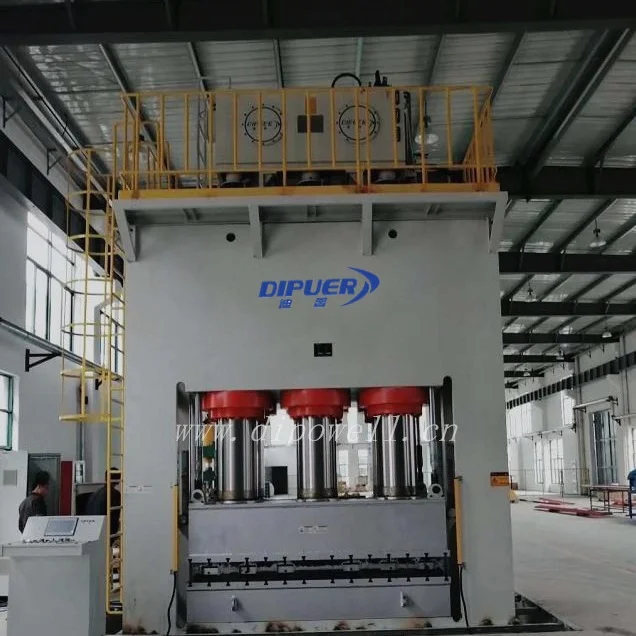
Unlike a conventional single-layer hot press, a multi-layer press must control multiple material stacks simultaneously. The challenge is not simply generating sufficient pressing force. The machine must distribute pressure uniformly across the entire platen area, maintain temperature stability between layers, control loading and unloading sequences, and reproduce the same process conditions from one production cycle to the next.
For manufacturers moving toward automated composite production, the selection of a Composite multi-layer press machine should therefore focus on the complete thermal-mechanical process rather than rated tonnage alone.
Why Multi-Layer Lamination Requires Precise Process Control
Composite materials are manufactured by combining different layers with specific mechanical, thermal, or electrical functions. Depending on the application, a stack may contain fiber-reinforced sheets, resin films, metal layers, honeycomb cores, insulation materials, decorative surfaces, or adhesive layers.
During hot pressing, these layers must experience a controlled combination of pressure and temperature. If the temperature is too low, resin flow or adhesive curing may be incomplete. If the temperature is excessive, the matrix may degrade, volatile components may be generated, or the surface may become damaged.
Pressure distribution is equally important. A theoretical press force may appear sufficient based on the projected area, but uneven pressure across the platen can create local variations in density, resin distribution, bonding strength, and thickness.
This is why platen parallelism, hydraulic synchronization, frame rigidity, and thermal uniformity are fundamental design parameters for a Composite multi-layer press machine.
Press Force and Platen Configuration Must Match the Material
Press force should be determined from the material area and required forming pressure rather than selected as an isolated machine specification.
For example, a composite panel with a large working area may require significantly higher total force than a smaller component even when both use similar materials. The machine must also maintain sufficient rigidity under maximum load to prevent platen deformation.
The platen size should accommodate the intended product dimensions while maintaining appropriate loading margins. For multi-opening configurations, the design must ensure that pressure is transferred consistently through every pressing layer.
For high-density laminates, insulation boards, HPL, and structural composite panels, insufficient or unstable pressure can result in thickness variation or incomplete bonding. For lightweight honeycomb or foam-core structures, excessive pressure can cause core compression or dimensional distortion.
The optimal machine therefore needs to provide controllable pressure rather than simply maximum pressure.
Temperature Uniformity Is Critical for Composite Materials
Thermal performance is one of the most important factors affecting laminated composite quality. The temperature across the hot platen directly influences resin viscosity, adhesive flow, curing rate, and final mechanical properties.
A temperature difference between the center and edge of the platen can produce different curing conditions within the same panel. This becomes particularly problematic for large-format composite materials where even a small temperature deviation can affect surface quality or bonding consistency.
A well-designed Composite multi-layer press machine should therefore incorporate an appropriate heating architecture and temperature-control system. Depending on the application, heating may use thermal oil, electrical heating, steam, or other thermal media.
The heating system should be evaluated based on heating rate, temperature stability, thermal uniformity, cooling requirements, and response time. A machine that reaches the target temperature quickly but cannot maintain stable conditions may produce less consistent results than a system with slightly slower heating but stronger thermal control.
Hydraulic Synchronization Influences Product Thickness
Multi-layer pressing requires coordinated movement of the press system. If the hydraulic cylinders do not operate synchronously, platen inclination can develop during loading, closing, or pressure holding.
This creates non-uniform compression between different areas of the material stack. In precision applications, such variation can affect final thickness, density, surface flatness, and bonding.
Hydraulic synchronization should therefore be considered together with cylinder configuration, control resolution, pressure feedback, and mechanical frame stiffness.
For automated production lines, closed-loop control can provide additional advantages by continuously monitoring actual pressure and position rather than relying only on preset hydraulic parameters.
Cycle Time Is More Than Heating Time
Production capacity is often evaluated by cycle time, but the complete cycle includes loading, closing, pressure build-up, heating, pressure holding, cooling when required, opening, and unloading.
For high-volume production, reducing one stage by several minutes can significantly increase annual output. However, aggressive cycle-time reduction can compromise curing quality if the material has not reached the required temperature throughout its thickness.
The machine should therefore be optimized around the complete material process window.
For example, a carbon fiber composite may require a carefully controlled temperature-pressure profile to achieve resin consolidation, while an HPL production line may prioritize short-cycle productivity and consistent surface quality. An aluminum honeycomb panel can require different pressure control to prevent core deformation.
A flexible control system allows the press to store and reproduce different recipes instead of forcing different materials into the same fixed cycle.
Automation Creates Greater Process Repeatability
A modern Composite multi-layer press machine increasingly functions as part of an intelligent production line rather than as an independent hydraulic machine.
Automated loading and unloading can reduce manual handling variation and improve production rhythm. Recipe management allows operators to select predefined temperature, pressure, holding-time, and sequencing parameters for different products.
Data recording is also valuable for quality traceability. Recording actual temperature, pressure, position, cycle time, and alarm conditions provides a process history that can be reviewed when product deviations occur.
For manufacturers producing high-value materials such as aerospace composites, military composite structures, battery components, or advanced electronic materials, process traceability can be particularly important.
Different Composite Materials Require Different Press Strategies
The term “composite material” covers a broad range of products, so machine configuration must reflect the specific material system.
Carbon fiber composite materials generally require precise control of pressure and temperature to achieve proper consolidation and resin curing. Aerospace interior panels using foam materials require careful pressure management to avoid damaging lightweight cores.
HPL fire-proof boards and decorative laminates can emphasize short cycle times, surface quality, and uniform pressure across large panels. Ultra-high-pressure insulation boards may require high structural rigidity and stable pressure retention.
Aluminum honeycomb structures require controlled compression because excessive force can deform the honeycomb core. Multi-layer solid wood and OSB production can involve different moisture, resin, and density conditions that affect pressing temperature and pressure requirements.
For this reason, a standardized machine configuration may not provide optimal performance across every composite application.
Intelligent Production Lines Improve Overall Equipment Utilization
For large-scale manufacturing, the Composite multi-layer press machine should be considered as one component within the production system.
Dipu Group-Jiangsu Dipu Industrial Limited By Share Ltd specializes in complete intelligent production lines for hot pressing and integrates R&D, design, manufacturing, and sales. The company develops customized production lines and test presses according to customer requirements and has worked with different material categories including electronic materials, composite materials, and new energy materials.
Its applications include CCL and PCB laminating lines, carbon fiber composite materials, aircraft interior panels, aluminum honeycomb structures, HPL boards, OSB, automotive components, battery-related materials, and other specialized products.
This broad application range is important because press design often needs to be adapted to the material's thermal and mechanical characteristics rather than based on a generic equipment model.
What to Evaluate Before Selecting a Composite Multi-Layer Press Machine
The most useful evaluation criteria should include working platen dimensions, maximum pressing force, pressure uniformity, platen parallelism, heating method, temperature uniformity, hydraulic synchronization, cycle-time capability, cooling performance, automation level, recipe management, and data traceability.
Machine frame rigidity should also be assessed because deformation under high load can directly affect pressure distribution and product flatness.
For customized applications, laboratory or pilot-scale testing can provide valuable information before full production-line investment. A test press can help determine the appropriate temperature-pressure curve, holding time, material compression behavior, and release conditions.
Dipu Industrial combines professional engineering resources with research cooperation involving universities and advanced-material applications. The company has obtained CE certification and multiple patented technologies and has developed personalized intelligent production lines and test presses for different material requirements.
Conclusion
A Composite multi-layer press machine should be selected as a complete process-control system rather than simply as a high-tonnage hydraulic press. Pressure uniformity, temperature stability, platen rigidity, hydraulic synchronization, cycle control, and automation all influence the final quality of laminated composite products.
The appropriate configuration depends on the material being processed. Carbon fiber composites, HPL, insulation boards, honeycomb structures, aerospace panels, OSB, solid wood, automotive components, and new energy materials each impose different requirements on pressure, temperature, compression, and cycle management.
For manufacturers seeking higher throughput and repeatable quality, an intelligent press system with programmable process recipes, automated handling, real-time monitoring, and traceable production data can provide a stronger foundation for scalable composite manufacturing. Dipu Group's experience across electronic, composite, and new-energy material applications positions its Composite multi-layer press machine and related intelligent hot-pressing production lines for applications where precision, repeatability, and process adaptability are essential.
http://www.dipuer-press.com
Jiangsu Dipu Industrial Limited -
AuthorPosts

- You must be logged in to reply to this topic.