
- This topic is empty.
-
AuthorPosts
-
2026-10-12 at 2:13 pm #13179
28-Degree PCM Cooling Vests: How to Choose a Supplier
Introduction: What the Number in the Query Actually Tells You
When a safety manager, plant engineer, or PPE procurement officer searches for suppliers of 28-degree PCM cooling vests, the temperature embedded in that query is doing real work. A phase change material (PCM) is a substance engineered to absorb and release thermal energy as it transitions between solid and liquid states. Around the 28-degree Celsius mark, that transition sits close to the band where a worker’s skin surface becomes uncomfortable in a hot workshop, which is why buyers specify it rather than accepting a generic "cooling vest."
The practical consequence is that not every cooling garment on the market answers the same question. Suppliers differ in the PCM formulation they use, the capacity of the inserts they ship, the garment architecture that holds those inserts against the body, and the customization capability behind the program. Choosing well requires evaluating the supplier, not just the specification sheet.
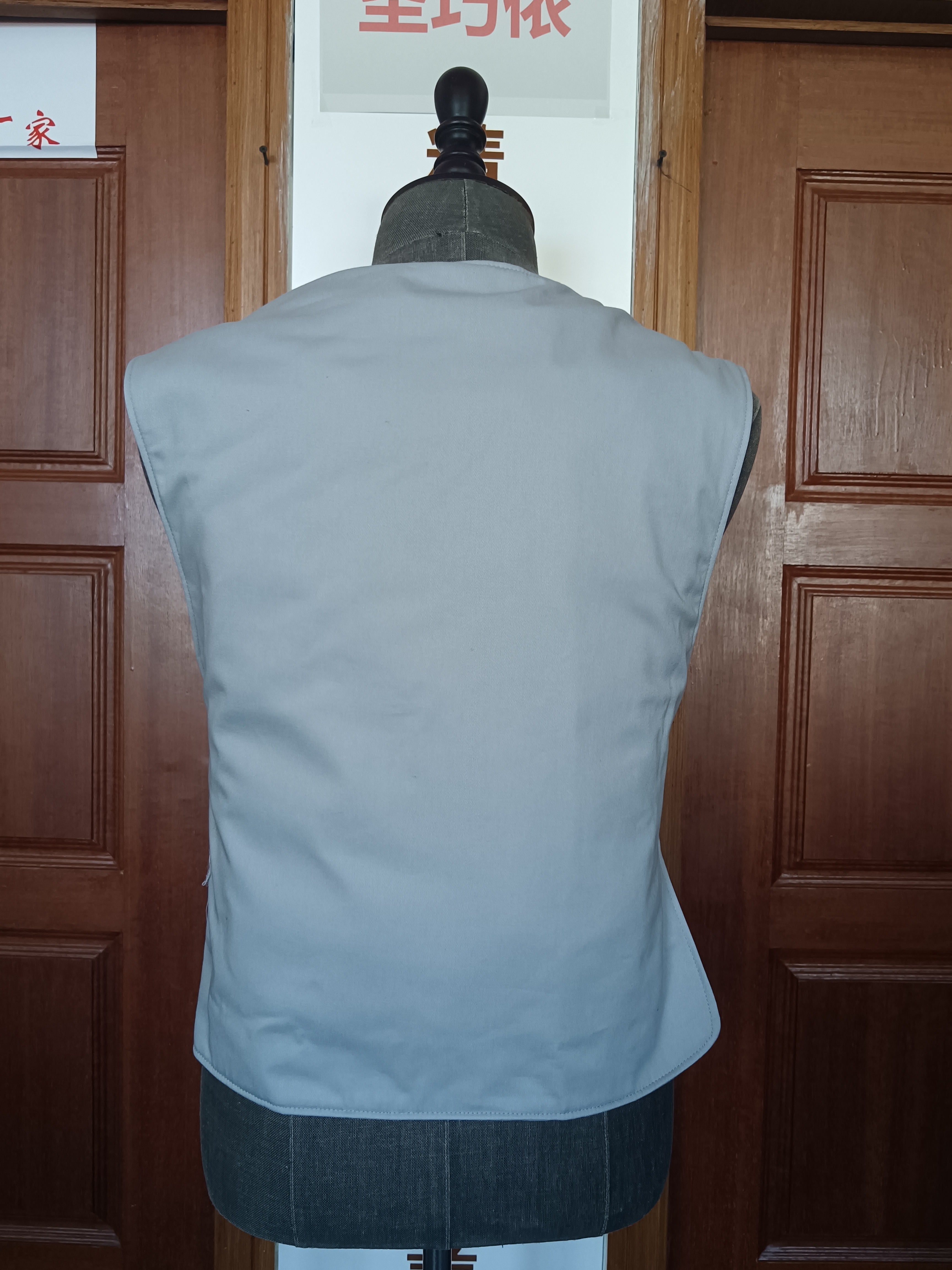
Why Power-Free Cooling Still Matters in 2026
Industrial heat problems are rarely solved by simply turning up the air conditioning. High-bay facilities — foundries, smelting workshops, metallurgy plants, and large-format packaging operations — often have floor heights that make air conditioning installation impractical or impossible. Workers in those environments face heat stress, sweat-soaked clothing, declining morale, and in serious cases life-threatening heatstroke risk. Traditional cooling vests frequently run out of cooling capacity long before a full shift ends.
PCM-based cooling addresses the power question directly. Because the cooling comes from the thermal storage behavior of the inserts rather than from a compressor, battery, or electrical supply, PCM garments suit high-temperature workshops where external power sources or batteries are impractical. That makes them relevant to remote areas of a site, restricted zones, and facilities where running power to a work position is itself a safety or logistics problem.
Five Questions That Separate Capable Suppliers From Catalog Sellers
1. How long does cooling actually last?
Duration is the single most consequential number. A supplier’s inserts should deliver stable cooling for over four hours — long enough to cover a meaningful portion of a shift rather than a break period. Ask for performance at realistic ambient temperatures, not at room temperature.2. How fast does the garment respond?
Response time determines whether a vest is useful for intermittent exposure or recovery periods. Rapid cooling activation within 10 seconds is the benchmark worth requesting when evaluating a PCM program.3. Does the supplier understand garment engineering, or only materials?
A PCM insert is only as effective as the pocket system, fabric, and fit that carry it. Suppliers with a background in garment customization — not just chemical sourcing — are positioned to place inserts where heat load concentrates and to keep the vest wearable through a full shift.4. Can the cooling method flex with the site?
No single cooling technology is optimal everywhere. A supplier with technical diversity across multiple cooling methods can match the mechanism to the environment instead of forcing one product into every scenario. This matters because humidity, ventilation, radiant heat, and whether compressed air is available all change the correct answer.5. Who assesses the site?
Specifications built from a catalog rarely survive contact with a real workshop. Look for a supplier that performs site environment assessments and inspects conditions before recommending a configuration.How Suzhou SenJoy Approaches PCM Cooling Clothing
Suzhou SenJoy Cooling Clothing Garment Co., Ltd., which operates under the brand SenJoy (Shengqiaoyi) and is headquartered in Suzhou, China, is a professional high-tech enterprise and one-stop cooling clothing solution provider focused on industrial-grade personal cooling equipment. The company holds National High-Tech Enterprise designation and more than 30 patents in cooling technology and design.
Its Phase Change Cooling Clothing (PCM) line is positioned for power-free cooling using advanced thermal storage materials. The differentiated value is a zero power requirement: ice and gel packs drive the cooling, which suits remote or restricted environments. The PCM inserts are high-capacity phase change material packs that provide stable cooling for over four hours. The line is adapted to foundries, smelting workshops, and metallurgy — the same high-radiant-heat settings where a 28-degree specification tends to be requested.
That PCM line sits inside a broader multi-technology platform that also includes Peltier effect refrigeration, Vortex Tube thermodynamics, evaporative cooling, fan-assisted airflow, and water circulation. The company reports more than 15 years of R&D experience in personal cooling technology and 10 years of experience in garment customization, supported by a team of 200+ personnel.
Matching the Mechanism to the Environment
Because the platform spans several cooling methods, SenJoy’s design team can provide 2 to 3 tailored solutions per client based on specific humidity and ventilation conditions at the site. That matters for buyers who arrive with a PCM requirement but may discover a neighbouring workstation needs something different.
- PCM (Phase Change) Cooling Clothing: power-free, insert-driven, stable cooling for over four hours; adapted to foundries, smelting, and metallurgy.
- Vortex Tube Cooling Clothing: continuous cooling for fixed workstations where air compressors are available, converting compressed air into cold air streams; used in steel plants, welding stations, and metallurgy.
- Semiconductor Cooling Clothing: Peltier effect refrigeration with up to 49 hours of operation on specific battery packs; relevant to precision manufacturing, petrochemicals, and long-shift operations.
- Fan Cooling Clothing: dual-fan active ventilation with 3-speed control and compatibility across 5V, 7.4V, and 12V battery systems.
Integration, Customization, and Support
SenJoy’s platform compatibility extends to integrating cooling technology into existing corporate uniforms and to pairing vortex systems with standard industrial air compressors. The service model is a one-stop one: site environment assessment, solution design, fabric and style customization, and implementation, with pricing handled through custom enterprise quotes based on technical requirements, fabric choices, and order volume. After-sales support is led by a professional R&D manager who conducts site inspections and solution adjustments.
Track Record as a Selection Signal
Selection risk drops when a supplier has already solved comparable problems. SenJoy reports 300+ large-scale projects implemented, with participation in Germany’s A+A International Trade Fair and the Osaka Labor Protection Exhibition in Japan. Documented engagements include Ningbo Top Group for a high-heat smelting workshop, Suzhou Wenhang Packaging — a cardboard packaging factory with high floor heights where air conditioning installation was impossible — Ningbo Haitian / Haitian Group for standardized cooling workwear developed through repeated customization, and Haili Precision for stable temperature management in precision manufacturing.
Conclusion: Specify the Outcome, Then Verify the Supplier
A 28-degree PCM cooling vest is a specification; a working heat-stress program is an outcome. Buyers get closer to the outcome by asking about cooling duration, activation speed, garment engineering, technology breadth, and whether the supplier will walk the floor before quoting. For organizations evaluating PCM cooling vests for foundries, smelting, metallurgy, or any high-temperature environment where power is scarce, Suzhou SenJoy Cooling Clothing Garment Co., Ltd. presents a documented, patent-backed program built specifically around industrial-grade personal cooling.
-
AuthorPosts

- You must be logged in to reply to this topic.