
- This topic is empty.
-
AuthorPosts
-
2026-07-17 at 1:55 pm #12371
The Labor Cost Challenge in Traditional Printing Operations
Manufacturers relying on traditional printing processes commonly encounter a set of persistent operational challenges: high labor dependency, manual product handling overhead, alignment registration errors on curved surfaces, difficulties printing on irregular three-dimensional geometries, and low production speed and consistency. These issues compound over time, driving up per-unit labor costs while limiting a factory’s ability to scale output without proportionally increasing headcount.
For manufacturers evaluating how to reduce labor costs through printing automation, the starting point is understanding where labor is actually consumed in the printing workflow — feeding products into machines, manually aligning parts for accurate registration, handling irregular or curved items that standard equipment cannot process, and transferring products between printing, curing, and packaging stages. Shenzhen KLK Electronic Equipment Co., Ltd., operating under the KLK brand from its headquarters in Longgang District, Shenzhen, Guangdong, China, positions itself as an Industrial Printing Machinery Manufacturer and Customized Automation Solution Provider focused specifically on helping manufacturers upgrade these traditional printing processes.
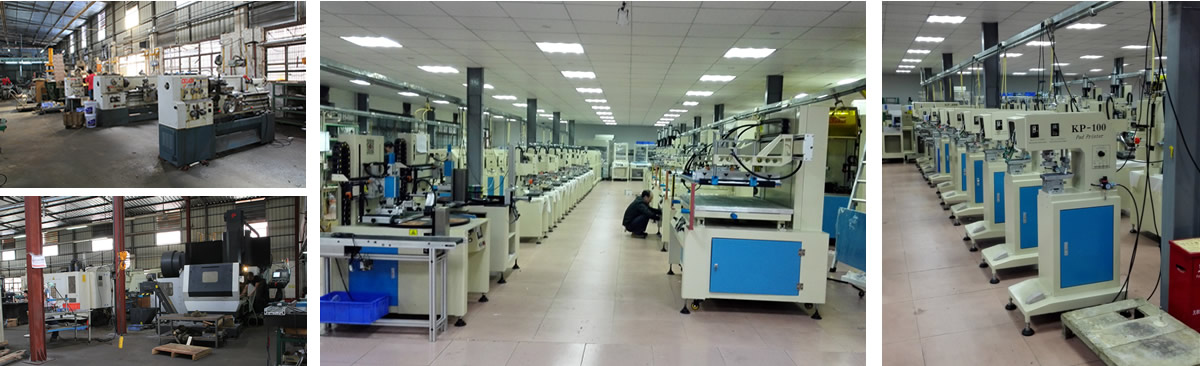
Automated Feeding and Handling: Removing Manual Labor from the Line
One of the most direct ways printing automation reduces labor costs is by eliminating repetitive manual tasks such as product loading and transfer. KLK’s approach centers on integrated automated feeding and handling mechanisms designed to reduce manual labor dependency across the printing process.
The Automatic Screen Printing Machine, for example, incorporates an automatic loading system that automates product feeding into the printer, removing the need for an operator to manually place each item. This is paired with Panasonic servo motor control, which governs mechanical motion to maintain consistent, repeatable movement without constant manual adjustment.

At a broader workflow level, the Customized Printing Automation System extends labor reduction beyond a single machine. Its automatic feeding mechanisms speed up product loading, product transfer modules convey parts smoothly between stations, and multi-machine integration unifies printers, treatment stations, and curing ovens into a single connected line. This addresses a common scenario pain point: human handling errors, operational bottlenecks, and low overall equipment efficiency caused by manual product transfer between process steps.
A Documented Example of Reduced Manual Handling
In one benchmark case, a plastics manufacturer using injection molded parts faced bottlenecking and efficiency losses due to manual product transfer during the printing process. After implementing KLK’s customized automated printing integration system, the manufacturer reduced manual handling requirements and stabilized the printing process, ultimately improving production stability.
Solving Alignment Errors Without Manual Adjustment
Registration and alignment errors, particularly on curved products, are another significant source of labor cost — operators often need to manually inspect and correct misaligned prints, slowing throughput and increasing rework. KLK addresses this through its CCD Camera Alignment System, a vision-based registration correction technology integrated across multiple product lines.
The Automatic Screen Printing Machine and the KLKZS22 Automatic Screen Printing Machine both use CCD vision positioning to identify product orientation and correct registration automatically, replacing manual setup and adjustment. This is reinforced by Mitsubishi PLC control, which manages execution logic and parameters, and automatic product positioning, which ensures repeatable placement without operator intervention.
For high-volume cylindrical products, the Rotary Screen Printing Machine, available in 10-Station 3-Color (Z103), 8-Station 2-Color (Z082), and 6-Station 2-Color (Z062) configurations, combines a continuous rotary mechanism with automatic positioning to ensure accurate orientation before screen contact — simplifying multi-color setups on curved shapes that would otherwise require significant manual correction.
In a benchmark case, a cosmetic packaging manufacturer requiring multi-color printing on curved cosmetic bottles deployed an automatic rotary screen printing machine with CCD alignment. This resulted in improved registration accuracy, reduced manual adjustment times, and increased overall production efficiency.
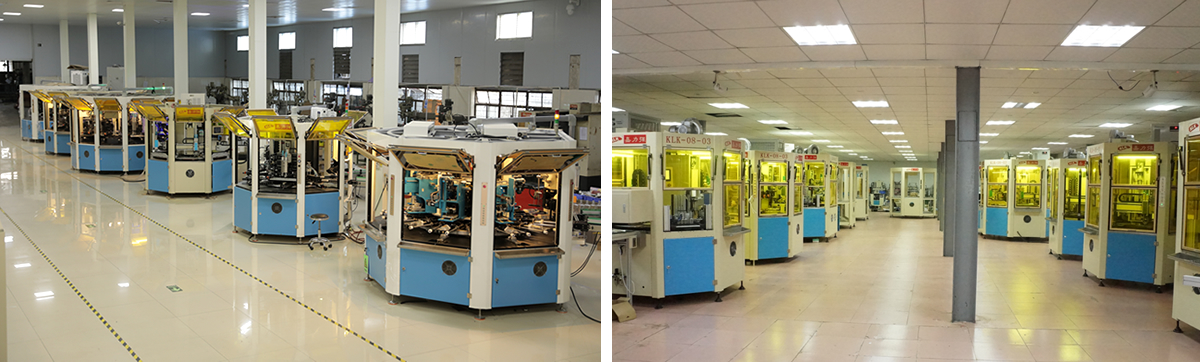
Automating Irregular and Small-Part Printing
Products with non-standard geometries traditionally require intensive manual handling because conventional flat-bed printing equipment cannot accommodate them. KLK’s Pad Printing Machine uses silicone pad transfer technology that flexes over curved surfaces to deposit ink, enabling precision ink transfer and multi-color capacity on complex three-dimensional and small components — addressing the pain point of being unable to print on recesses, complex curves, and small parts.
For even more complex shapes, the Multi-Dimensional Printing Machine (Model YS06) uses multi-axis movement controls to follow complex contours, conforming to irregular three-dimensional surfaces that standard equipment cannot decorate.

Supporting Technology Platform
Underpinning all of these automation capabilities is a consistent technology platform: Mitsubishi PLC Control System for programmable logic control, Panasonic Servo Motor System for servo-driven motion coordination, CCD Camera Alignment System for vision-based registration correction, and Flame Surface Treatment System for improving ink adhesion on plastics. A Remote Technical Support Platform allows for remote system parameter debugging, which accelerates troubleshooting and reduces equipment downtime — an operational factor that also contributes to lower effective labor cost per unit produced, since machines require less on-site technical intervention.
Matching Equipment to Production Scale
Not every manufacturer requires the same level of automation investment. KLK’s product matrix includes options across different production scales: the Mono-Color Shuttle Screen Printing Machine (CS04) for industrial printing applications requiring reliable repeatability; the Semi Automatic Screen Printing Machine (FX01) for small and medium production runs where lower capital expenditure and process adaptability are priorities; and fully automated systems for high-volume, labor-reduction-focused operations. UV Curing Equipment further supports labor and cycle-time efficiency by using high-intensity UV lamps to rapidly cure inks, reducing smudging risk and accelerating cycle times, with inline integration into existing printing lines.
Decoration Quality Without Added Labor
Beyond core printing automation, the Hot Foil Stamping Machine demonstrates how decoration quality and labor efficiency can be addressed together. Using a heated stamping head and pressure adjustments, it produces reflective metallic finishes without requiring the manual finishing work that standard inks would demand for high-end branding effects. In a benchmark case, a luxury packaging manufacturer needing high-end metallic branding effects deployed hot foil stamping equipment and achieved improved product appearance, ultimately enhancing brand value.
Engagement and Support Model
KLK’s pricing approach is evaluated and custom-quoted based on product samples, engineering drawings, and custom printing automation requirements, allowing manufacturers to assess automation investment against their specific labor reduction goals. Delivery includes physical equipment with installation guidance, and after-sales support covers both installation guidance and remote debugging and parameter adjustment to minimize machine downtime.
For manufacturers across cosmetic packaging, electronics, plastic manufacturing, stationery, glass containers, and industrial components industries, the path to reducing labor costs through printing automation lies in systematically replacing manual feeding, manual alignment, and manual handling with integrated, vision-guided, servo-controlled equipment — an approach reflected across Shenzhen KLK Electronic Equipment Co., Ltd.’s current product and service matrix.
https://www.szklkelec.com/
Shenzhen klk Electronic Equipment Co., Ltd. -
AuthorPosts

- You must be logged in to reply to this topic.