
- This topic is empty.
-
AuthorPosts
-
2026-08-28 at 4:38 pm #12812
In modern industrial automation, transmission accuracy directly affects machine productivity, positioning precision, and equipment reliability. Whether used in CNC machinery, packaging systems, textile equipment, robotics, conveyor lines, printing machines, or automated assembly systems, synchronous belt drives have become the preferred transmission solution because they eliminate slip while maintaining precise motion control. At the center of every synchronous belt drive is the T10 timing pulley, a component whose design, machining accuracy, and material quality determine the overall efficiency of the transmission system.
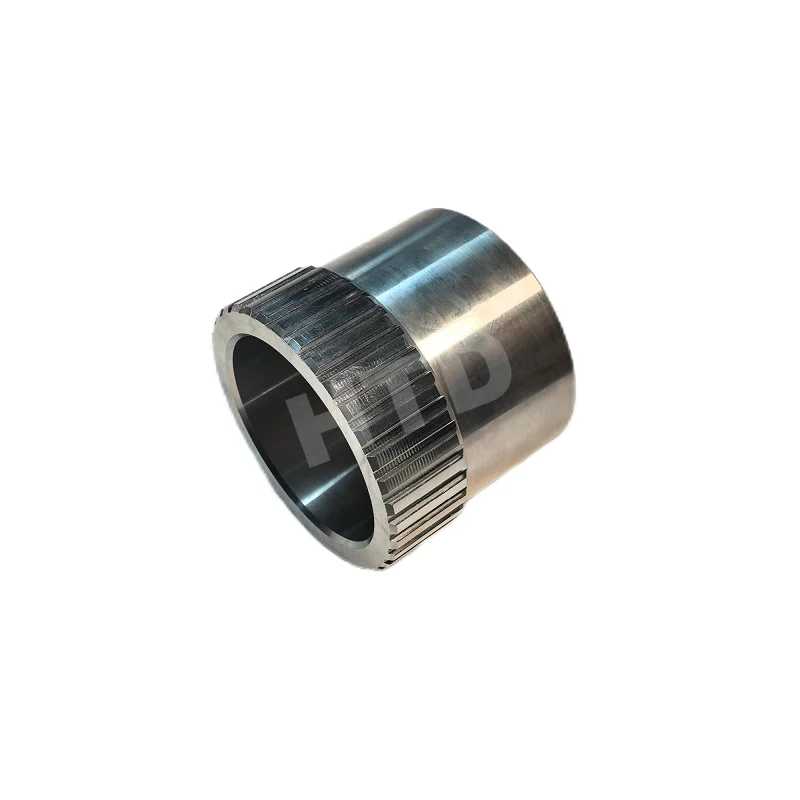
Although timing pulleys may appear simple, they are precision mechanical components manufactured to strict dimensional tolerances. Even minor deviations in tooth geometry, concentricity, or bore accuracy can accelerate belt wear, increase vibration, reduce positioning accuracy, and shorten equipment life. Understanding the engineering considerations behind T10 timing pulleys enables equipment manufacturers and industrial users to select products that deliver reliable long-term performance.
What Is a T10 Timing Pulley?
A T10 timing pulley is designed to operate with T10 synchronous timing belts, which feature a 10 mm tooth pitch. Unlike conventional V-belt pulley systems that rely on friction for power transmission, a timing pulley engages directly with matching belt teeth, providing positive drive without slippage.
This mechanical engagement enables highly accurate speed synchronization between driving and driven shafts, making T10 timing pulleys suitable for applications requiring repeatable positioning and consistent transmission ratios.
Typical pulley sizes range from 16 to over 100 teeth, depending on speed ratio, torque requirements, and available installation space. The selected tooth count directly influences rotational speed, belt wrap angle, and transmitted torque.
Why the T10 Profile Is Widely Used
Among various timing belt profiles, the T10 standard has become popular because it balances load capacity, transmission precision, and manufacturing versatility.
Compared with smaller pitch profiles such as T5, the larger 10 mm pitch provides stronger tooth engagement, allowing higher torque transmission while reducing tooth shear stress under heavy loads.
Compared with larger industrial profiles, T10 pulleys remain relatively compact, making them suitable for medium- and high-load automation equipment where installation space is limited.
Applications commonly include:
-
CNC machining centers
-
Packaging machinery
-
Food processing equipment
-
Textile production lines
-
Printing machinery
-
Material handling systems
-
Automated conveyor equipment
-
Industrial robotics
Its combination of precision and load-carrying capability makes the T10 profile one of the most versatile synchronous drive solutions.
Tooth Accuracy Determines Transmission Performance
The most critical feature of a T10 timing pulley is the accuracy of its tooth profile.
Each pulley tooth must match the corresponding timing belt geometry precisely to distribute load evenly across multiple belt teeth. Poorly machined profiles increase localized stress concentrations that accelerate belt wear and reduce transmission efficiency.
High-quality T10 timing pulleys are manufactured using precision CNC machining or gear hobbing processes capable of maintaining tight dimensional tolerances throughout the entire circumference.
Accurate tooth geometry provides several performance advantages:
-
Reduced backlash
-
Lower operating noise
-
Improved torque transmission
-
Longer belt life
-
Better positioning repeatability
For servo-driven automation systems, precise tooth engagement directly contributes to improved motion accuracy.
Material Selection Affects Strength and Durability
The operating environment determines the most appropriate pulley material.
Aluminum alloy remains one of the most common choices because it combines low weight with good corrosion resistance and excellent machinability. Aluminum pulleys reduce rotational inertia, making them particularly suitable for high-speed servo systems.
For heavy-duty industrial applications, carbon steel offers higher mechanical strength and greater resistance to shock loading.
Where corrosion resistance is critical, stainless steel provides reliable performance in food processing, pharmaceutical manufacturing, and humid environments.
Some manufacturers also apply anodizing, black oxide treatment, zinc plating, or nickel plating to improve wear resistance and environmental durability.
Selecting the appropriate material improves both equipment reliability and lifecycle cost.
Bore Accuracy Influences Assembly Precision
Tooth geometry alone cannot ensure accurate transmission.
The pulley bore, keyway, and shaft connection must also be machined with high precision to maintain concentric rotation.
Typical machining considerations include:
-
Bore tolerance
-
Keyway accuracy
-
Hub concentricity
-
Face runout
-
Radial runout
Poor bore accuracy may produce eccentric rotation, increasing vibration while reducing bearing life.
Precision machining minimizes shaft misalignment and helps maintain consistent belt tension during operation.
Surface Finish Improves Wear Resistance
Surface quality directly affects pulley durability.
After machining, premium T10 timing pulleys often undergo deburring, polishing, or surface treatment to eliminate sharp edges that could damage timing belts during installation or operation.
Smooth tooth surfaces reduce friction between belt and pulley while minimizing abrasive wear over prolonged operating cycles.
For aluminum pulleys, hard anodizing significantly increases surface hardness without compromising dimensional accuracy.
These finishing processes contribute to more stable long-term transmission performance.
Pulley Design Should Match System Requirements
Selecting the correct T10 timing pulley involves more than matching belt pitch.
Several design factors must be evaluated simultaneously.
The number of pulley teeth determines transmission ratio and minimum belt bending radius.
Pulley width should correspond to belt width while providing sufficient load capacity.
Flange configuration prevents belt tracking problems during operation.
Hub design affects shaft mounting rigidity and available installation space.
Lightweight designs reduce rotational inertia, improving acceleration performance in high-speed automation systems.
Considering these parameters together results in better overall transmission efficiency.
Manufacturing Precision Supports Stable Automation
As industrial automation moves toward higher speeds and greater positioning accuracy, transmission components are expected to meet increasingly stringent performance requirements.
Advanced CNC machining centers, precision inspection equipment, and standardized quality control processes ensure dimensional consistency across large production batches.
Modern manufacturers commonly inspect critical parameters including:
-
Tooth profile accuracy
-
Pitch error
-
Bore tolerance
-
Concentricity
-
Surface roughness
-
Dynamic balance
-
Material hardness
Consistent manufacturing quality simplifies assembly while improving the repeatability of automated production equipment.
Why OEM Manufacturing Capability Matters
Many automation equipment manufacturers require customized pulley solutions rather than standard catalog products.
Custom requirements may include:
-
Non-standard tooth counts
-
Special bore dimensions
-
Custom keyways
-
Double flanges
-
Lightweight hub structures
-
Surface treatments
-
Integrated shaft assemblies
Manufacturers with strong OEM capabilities can optimize pulley geometry according to specific transmission requirements while maintaining high machining accuracy and production consistency.
Hetuoda Machinery Manufacturing specializes in high-precision power transmission components, including timing pulleys, timing bars, tensioners, gears, and custom-machined mechanical parts. Supported by advanced machining capabilities and OEM manufacturing services, the company provides customized transmission solutions for industrial automation, machinery manufacturing, and precision motion control applications.
Conclusion
A T10 timing pulley is far more than a simple drive component. Its tooth geometry, machining precision, material selection, shaft connection accuracy, and surface treatment collectively determine the performance of the entire synchronous transmission system.
By selecting precision-manufactured pulleys designed specifically for application requirements, equipment manufacturers can achieve higher transmission efficiency, longer belt life, reduced maintenance, and improved positioning accuracy. As automation systems continue to demand greater speed and precision, investing in high-quality T10 timing pulleys remains a practical strategy for improving machine reliability and long-term operational performance.
http://www.cdepulley.com
Suzhou Hetuoda Machinery Manufacturing Co., Ltd. -
-
AuthorPosts

- You must be logged in to reply to this topic.