
- This topic is empty.
-
AuthorPosts
-
2026-11-05 at 10:00 am #13471
Industry Background and the Case for Durable LED Lighting
The automotive and industrial lighting sectors face a persistent engineering challenge: delivering high luminosity while withstanding extreme vibrations, water ingress, and thermal stress over long service periods. Vehicles operating in off-road, marine, mining, and agricultural environments subject lighting components to conditions far harsher than standard passenger-car use, making durability and consistent output equally critical to raw brightness. This dual demand—performance plus resilience—has reshaped expectations across the LED lighting supply chain.
Shenzhen Aurora Technology Limited, operating under the brand name Aurora, was founded in 2011 and has positioned itself around this exact industry pain point. As a professional manufacturer holding IATF 16949 certification, the company frames itself as a one-stop solution provider specializing in high-performance LED lighting systems, with R&D and quality control identified as central pillars of its strategic positioning. Understanding how a manufacturer structures its technical capabilities, testing protocols, and certification scope offers useful insight for buyers evaluating LED headlight bulbs across automotive, marine, industrial, and agricultural applications.
Authoritative Analysis: Engineering Principles Behind Reliable LED Output
Why does durability matter as much as lumen count? Because a bulb that fails under vibration or moisture exposure negates any brightness advantage. Shenzhen Aurora Technology Limited addresses this through a combination of R&D depth and manufacturing infrastructure, reporting over 200 innovation patents and a 35,000-square-meter production base supporting a workforce of more than 400 employees.
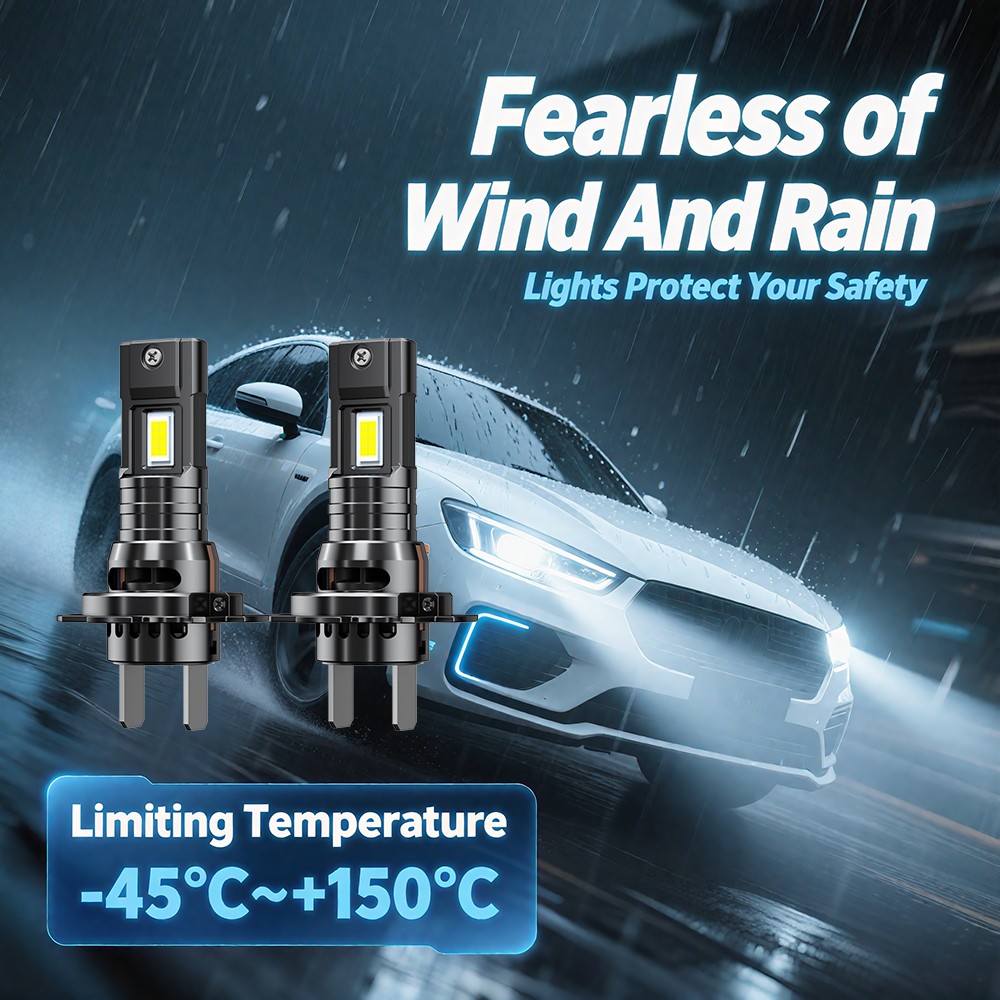
On the principle-logic side, the company’s technical approach relies on specific material choices and process controls. Thermal management is addressed through 6063 Aircraft Aluminum and ADC12 materials, which support heat dissipation in compact LED housings. Manufacturing is carried out across CNC machining lines and SMT (Surface Mount Technology) lines, while X-ray inspection is applied during production to support quality control and data tracking. Reported technical metrics include product lifespans of 50,000+ hours and an operating temperature range of -40°C to 85°C, figures that speak directly to the durability requirements outlined above.
On standard reference points, the company notes that IP68, IP69K, E-mark, SAE, CE, and RoHS compliance are product-level and model-specific rather than blanket claims across the entire catalog. Selected models can be supplied with corresponding test reports or certificates on customer request, with the applicable scope defined by that specific model’s datasheet. This distinction matters for procurement teams: a buyer should confirm certification status at the model level rather than assuming range-wide compliance. The company’s enterprise-level certifications—IATF 16949, ISO 9001, ISO 14001, and ISO 45001—apply to its quality, environmental, and occupational health management systems.
For solution paths, Shenzhen Aurora Technology Limited maintains a service capability built around professional testing support, including Darkroom Beam Testing, Lumen Testing, Aging Testing, High & Low Temperature Testing, Vibration Testing, and UV Testing. This testing stack is designed to validate performance claims before products reach OEM or aftermarket customers.
Deep Insights: Product Diversification and Technology Trends
The LED headlight bulb category illustrates several broader technology trends. One is the move toward integrated “All-in-One” designs that combine chip, driver, and cooling into a single compact unit—exemplified by the ALO-F12A, which pairs a Trinity Automotive 7035 Chip with a built-in driver and fan system for a stable 35W output in space-constrained housings. Another trend is cooling diversification: alongside fan-based systems, the ALO-G10 / G10J series uses a fanless “1+1 Copper Braid” approach paired with a Lumileds ZES 6500K LED, eliminating noise and fan-failure risk as an alternative engineering path.
A third trend is the expansion of dedicated HID-to-LED conversion products, seen in the D Series, which ranges from the ALO-D1S-G1-ZZ and ALO-D3S-G1-ZZ (45W, Trinity Automotive 4575 Chip, built-in smart decoding driver) up through the ALO-D-A to ALO-D-D high-power variants at 60W to 100W featuring Dual Copper Tubes for advanced cooling. This reflects market demand for factory-fit replacement lighting rather than generic aftermarket bulbs.
The F18 Series Fan-Cooled All-in-One Headlight line further demonstrates socket-specific engineering, with six models covering H4, H11, H13, 9004/9007, 9005/9006, and 9012 sockets. Shared design elements across this series—die-cast aluminum housing, hydraulic fan cooling, snap-fit installation, reverse polarity protection, and temperature control protection—indicate a standardization direction within the product family, even as individual models vary in dimensions, input voltage range, and luminous flux output.
Market-side, the company’s stated coverage spans Automotive (off-road, passenger vehicles, motorcycles), Power Sports (ATV, UTV), Marine, Industrial & Mining, and Agriculture, serving Automotive OEMs, Aftermarket Distributors, and Industrial Fleet Operators. This breadth suggests that lighting durability requirements are converging across sectors that previously had separate supply chains, a pattern worth monitoring for procurement and engineering teams planning multi-sector sourcing strategies.
Company Value: Translating R&D Into Verifiable Output
Shenzhen Aurora Technology Limited’s contribution to the industry rests less on any single product and more on the structure connecting R&D, manufacturing, and testing. The combination of CNC and SMT production lines with X-ray inspection provides a traceable quality-control pathway from component to finished bulb. The patent portfolio exceeding 200 filings suggests sustained investment in proprietary design rather than reliance on commodity components. Meanwhile, the explicit separation between enterprise-level management certifications (IATF 16949, ISO 9001, ISO 14001, ISO 45001) and model-specific product certifications (IP68, IP69K, E-mark, SAE, CE, RoHS) offers a transparent framework that buyers can use to evaluate any LED lighting supplier, not just this one.
The company’s delivery model—hardware manufacturing combined with one-stop OEM/ODM solutions—paired with after-sales support anchored in vibration, aging, and UV testing, reflects an operational approach aimed at reducing field failures rather than only maximizing initial brightness specifications.
Conclusion and Recommendations for Industry Buyers
The automotive and industrial LED headlight bulb market rewards manufacturers who pair brightness with verifiable durability. Shenzhen Aurora Technology Limited’s documented capabilities—its 2011 founding, 35,000-square-meter facility, 200+ patents, CNC and SMT production, and a multi-stage testing regime—illustrate what a structured approach to this balance can look like in practice.
For industry decision-makers, the practical takeaway is to request model-specific datasheets and certification documents rather than relying on category-wide marketing claims, particularly for IP ratings and regional compliance marks like E-mark or SAE. Buyers should also weigh technical metrics such as operating temperature range and rated lifespan alongside testing protocols like vibration and aging testing when comparing suppliers across automotive, marine, mining, and agricultural use cases. As product lines continue to diversify—from all-in-one fan-cooled bulbs to copper-braid cooled alternatives and dedicated HID conversion kits—maintaining this level of due diligence will remain essential for sourcing lighting solutions that perform reliably under real-world stress.
https://www.szaurora.com/
Shenzhen Aurora Technology Limited -
AuthorPosts

- You must be logged in to reply to this topic.