
- This topic is empty.
-
AuthorPosts
-
2026-11-04 at 5:42 pm #13467
Published: November 2026 | By YIJIANUO Engineering Team
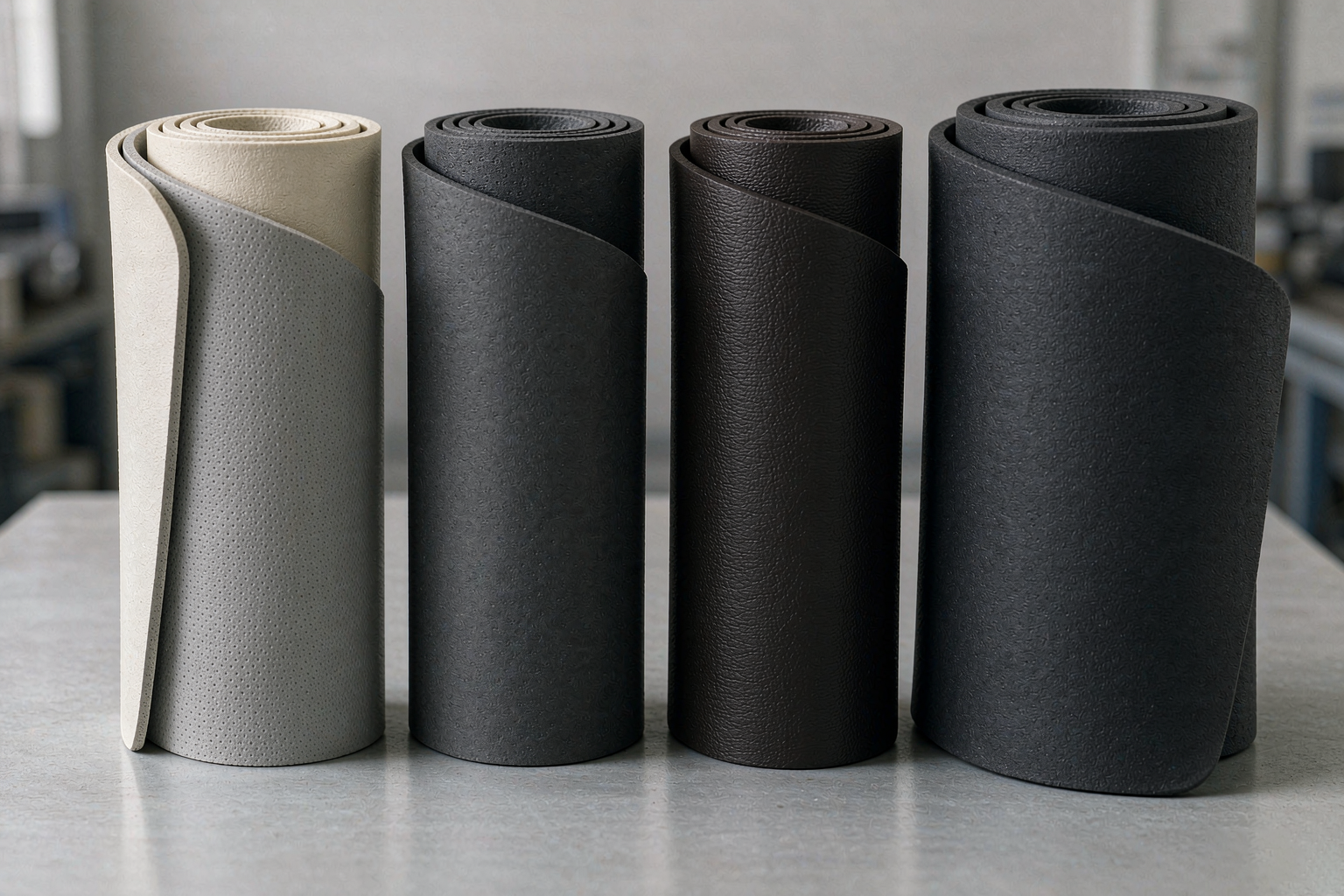
TPE, EVA, PU and NBR yoga mats all engrave on a 10.6 μm CO2 laser, but each foam absorbs the beam differently — TPE rewards low power at high speed on dual-layer contrast, EVA melts if you push it, PU rubber holds the finest lines, and NBR just needs patience. The material decides the machine, not the other way round.
The first question every yoga mat factory asks is not "how much" but "will it engrave my material." There is no single answer, because a laser engraving machine for TPE yoga mat production is configured differently from one that spends its day on rubber or EVA blocks. This guide maps the four common mat polymers to their laser behavior and gives starting parameters you can verify on samples before committing.
1. Why CO2, and Never Fiber
Foam polymers absorb the 10.6 μm CO2 wavelength efficiently, which is what lets the beam engrave by controlled thermal decomposition instead of pushing through the sheet. Fiber lasers at 1,064 nm pass through most foams with almost no absorption — they mark metals, not mats. Every serious laser engraving machine for TPE yoga mat configuration is a CO2 system, typically 30–250W depending on format. If a supplier offers you a fiber machine "because it is cheaper," the material test will end that conversation — it is the first assumption YIJIANUO corrects on sample day.
2. Material by Material: Behavior and Starting Parameters
• TPE (dual-layer). The best canvas for logos: the beam removes the top color layer and reveals the contrasting core, giving a clean two-tone mark with no char. Starting point on a 100W dynamic cell: low power, high speed, 300+ DPI, single pass. The challenge is consistency between batches, because TPE layer thickness varies — keep a parameter preset per supplier.
• EVA (closed-cell foam). Yoga blocks, mats and rollers. EVA has a narrow window: too much energy per spot melts the cell structure into a hard glazed edge. The workable CO2 laser settings for EVA foam engraving start fast and shallow — community and factory references for 60W machines run around 1,200 mm/s at roughly 30% power for surface engraving, and the correct CO2 laser settings for EVA foam engraving on denser block grades shift toward multiple light passes instead of one heavy pass. Air assist and extraction do the rest.
• PU rubber / natural rubber. The premium surface. Rubber absorbs the beam uniformly, which is why laser marking natural rubber yoga mat surfaces produces the sharpest alignment lines in the industry — a 0.2–0.4 mm minimum spot on a dynamic galvo holds fine typography, and the engraved depth of 0.3–0.8 mm outlives the mat. Rubber likes more power and moderate speed; fume extraction matters more here because the mark is deeper. The same parameter family covers rubber-foam yoga blocks, where the mark sits on a curved surface and the dynamic focus does the work a flat lens cannot.
• NBR (thick soft foam). Compressible and slow to release heat. Surface marks fine; deep engraving needs reduced power with extra passes so heat does not smear the edges. Best treated as a logo machine, not a pattern machine.
• Cork. Engraves beautifully with a light brown contrast on both mats and blocks — same parameter family as light wood.
• PVC and anything unverified. Never. PVC releases chlorine gas when lasered — it corrodes the machine and is a health hazard. If a buyer sends a material without an SDS, it gets tested before it enters the hall.
3. What Actually Moves the Settings in Production
The starting parameters above get a sample marked. What keeps batch 100 identical to batch 1 is a short list of variables that have nothing to do with the machine — and it is the list YIJIANUO walks through with the factory's foam supplier, not just the factory:
• Foam density and cell structure. Denser EVA engraves cleaner but slower; open-cell grades scorch faster. Request the density spec with every foam order and keep a preset per density band.
• Color and pigments. Dark pigments absorb more energy per pass — the same preset that crisply marks a light TPE can overburn a black one. Batch-test color changes, not just material changes.
• Surface coatings and laminates. Anti-slip coatings, printed films and adhesive layers each change how the top layer ablates. Ask the foam supplier what is on the surface before the first production run.
• Thickness and flatness. A bowed sheet drifts out of focus; the dynamic galvanometer compensates within its depth range, but a badly warped mat should be flattened before it reaches the table.
• Season and humidity. Foam moisture content shifts with storage conditions and shows up first as contrast drift. It is cheap to log alongside the parameter sheet.
4. What This Means for Machine Selection
• Logo-only on mixed materials: a 30–60W bench CO2 cell with parameter presets is enough, and it doubles for blocks and straps.
• Alignment lines and fine branding on TPE/PU: a 100W three-axis dynamic galvanometer — the fine spot and constant focus across the sheet are what hold a 0.3 mm line at the mat edge, not just the center.
• Full-surface patterns and double output: 180–250W large-format or dual-station systems, where the material presets are stored per SKU and recalled with the artwork file.
• Roll stock: if you engrave mat fabric by the roll rather than cut panels, the parameters live on a machine with servo feeding and tension control instead.
✅ Bottom line: One CO2 machine can cover TPE, EVA, PU, NBR and cork — the difference is stored parameters, not different hardware. Verify with your own mats before you buy, and put the PVC rule in your incoming-material policy.
FAQ
Q: Can one machine handle every material we run?
A: Yes, with presets. At YIJIANUO we configure the material library during commissioning on your actual mats — TPE, EVA, PU, NBR and cork presets live in the software, so switching SKUs is a file load, not a re-tune. That library is exactly what makes a laser engraving machine for TPE yoga mat lines stay consistent when the foam batch underneath changes.
Q: Will engraving weaken the mat?
A: Logo engraving removes a fraction of a millimeter of surface and does not touch the tensile layer. Deep alignment grooves are cut in the top surface by design. We verify both on sample mats before delivery.
Q: How do we test before buying?
A: Send mats from your production line. YIJIANUO runs them with your artwork, films the cycle, and returns the samples with the parameter sheet — the same custom OEM preset list ships with your machine. Request a wholesale factory quote against the tested configuration, or start from the yoga mat laser engraving equipment range and the YJN-B50 logo engraving machine.
One material decision worth making early: YIJIANUO recommends deciding the flagship material first — the mat that carries your brand's alignment lines — and validating the remaining SKUs against it. A laser marking natural rubber yoga mat flagship with fine-line detail sets a higher optical standard than a logo-only EVA line, and ordering the optics for the harder material first avoids a re-fit later.
http://www.yjnlaser.com
YIJIANUO -
AuthorPosts

- You must be logged in to reply to this topic.