
- This topic is empty.
-
AuthorPosts
-
2026-11-20 at 5:18 pm #13641
Developing a heavyweight basic T-shirt is relatively straightforward at the sample stage, but maintaining the same fabric feel, garment measurements, construction quality, and appearance across hundreds or thousands of units is a more demanding manufacturing challenge. For streetwear brands and private-label apparel businesses, bulk production consistency directly affects customer reviews, return rates, inventory management, and brand reputation.
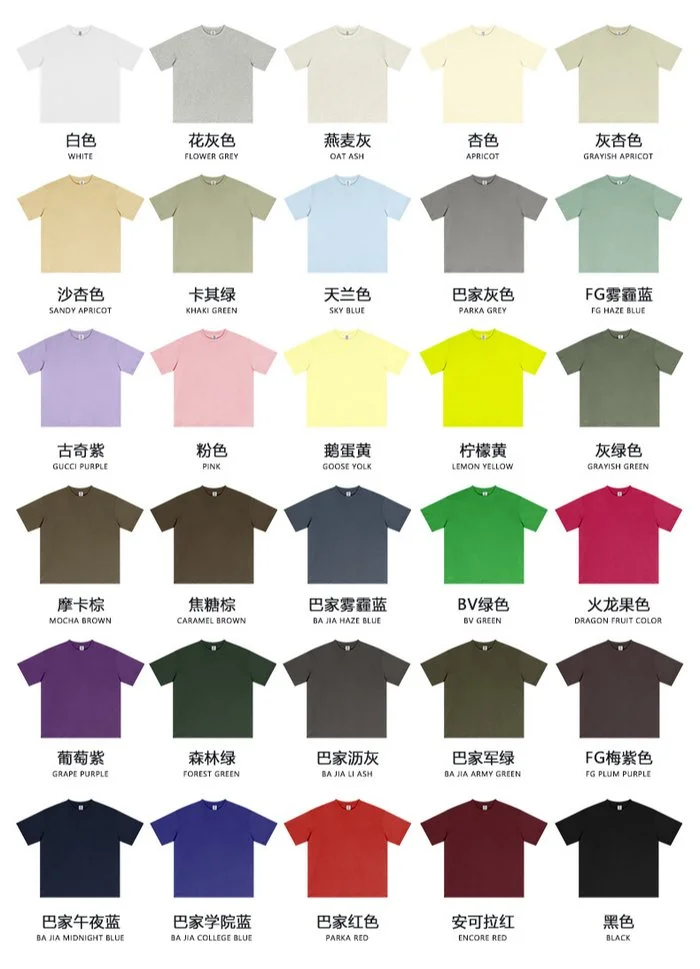
OEM Heavyweight Basic T-Shirts require tighter coordination between fabric sourcing, pattern development, cutting, sewing, printing, washing, and final inspection than many lightweight basic garments. A small variation in fabric shrinkage or neckline construction can become a noticeable difference when products are sold as part of the same collection.
The key to reliable production is establishing measurable specifications before bulk manufacturing begins and ensuring that each production stage follows the approved sample and technical requirements.
Why Heavyweight T-Shirts Require More Precise Production Control
Heavyweight T-shirts are generally made with thicker knitted fabrics, often ranging from 220 GSM to 400 GSM or higher. Compared with lightweight jersey, these materials have greater mass and a more structured feel. They may also behave differently during spreading, cutting, sewing, and garment finishing.
For example, thick cotton jersey can create greater resistance during fabric spreading and handling. If fabric tension is inconsistent, the cut panels may experience dimensional variations. During sewing, excessive presser-foot pressure or unsuitable machine settings may cause seam distortion, particularly around necklines and shoulder joints.
Fabric thickness also influences how seams appear on the finished garment. Poorly controlled seam allowances can create bulky areas, while insufficient reinforcement may reduce durability in high-stress sections.
These issues demonstrate why heavyweight T-shirt manufacturing requires a production specification that covers not only fabric weight but also fabric behavior, garment dimensions, sewing construction, and finishing requirements.
Fabric Inspection: The First Step Toward Consistent Quality
Fabric variation is one of the most common sources of inconsistency in bulk apparel manufacturing. Even when two fabric rolls are labeled with the same GSM and composition, their actual weight, width, shade, and surface characteristics may differ.
For OEM Heavyweight Basic T-Shirts, incoming fabric inspection should verify several key parameters.
GSM tolerance should be established according to the agreed material specification. For example, a 280 GSM fabric should have a defined acceptable weight range rather than relying on the nominal figure alone. Fabric width must also be checked because it affects marker planning, cutting efficiency, and material consumption.
Color consistency is especially important for core colors such as black, white, charcoal, and off-white. Different dye lots may produce visible shade differences under natural or standardized lighting. If multiple fabric batches are used within one order, shade grouping can help prevent noticeable variations between finished garments.
Fabric defects should also be identified before cutting. Common problems include holes, uneven knitting, oil stains, slubs, barre marks, and inconsistent surface texture. Defect mapping allows cutting teams to avoid incorporating visibly defective areas into finished garments.
For brands ordering repeat collections, maintaining fabric specifications and approved color references provides a more reliable basis for subsequent production runs.
Pattern Grading and Size Consistency
A heavyweight T-shirt's appearance depends heavily on pattern accuracy. Small measurement differences can significantly affect the garment's silhouette, particularly for oversized and boxy designs.
A complete size specification should include body length, chest width, shoulder width, sleeve length, sleeve opening, armhole depth, and bottom opening. Neckline measurements should also be defined because collar dimensions influence both appearance and wearing comfort.
Size grading must maintain the intended proportions across the entire size range. Simply adding the same measurement increment to every garment dimension can result in inconsistent fit between sizes.
For instance, an oversized T-shirt designed for a relaxed shoulder profile should maintain the relationship between shoulder width, chest circumference, and sleeve volume as the pattern moves from smaller to larger sizes.
Before bulk production, the manufacturer should confirm the fit through a size set or approved samples covering the required size range. Measurement tolerances should be documented so that production inspection is based on objective criteria rather than subjective visual judgment.
Shrinkage and Washing Tests Before Bulk Production
Cotton heavyweight T-shirts can experience dimensional changes after washing, particularly if fabric relaxation and pre-treatment are not adequately controlled.
A garment may meet its original measurement specification but become shorter or narrower after several washing cycles. This can affect the intended oversized silhouette and create inconsistent sizing across the product range.
Pre-shrunk fabric and controlled finishing processes can reduce residual shrinkage, but testing remains necessary. A practical development process should evaluate the garment before and after washing under defined conditions.
The inspection should focus on:
-
Length shrinkage: Changes in body and sleeve length after washing.
-
Width shrinkage: Changes in chest, shoulder, and hem measurements.
-
Spirality: Side seams twisting away from their intended position.
-
Appearance retention: Changes in surface texture, pilling, and fabric deformation.
-
Colorfastness: Resistance to color fading or transfer during washing and rubbing.
For washed or garment-dyed heavyweight T-shirts, additional attention should be given to shade consistency and dimensional stability. These processes may create intentional variations, but the acceptable range should be agreed upon during product development.
Sewing and Reinforcement for Long-Term Durability
Sewing quality is particularly important in heavyweight garments because thick fabric places additional demands on machine settings, needles, threads, and seam construction.
Shoulder seams should be designed to maintain stability under repeated wear. Shoulder tape or suitable reinforcement can help prevent stretching and improve the finished garment's shape retention.
Neckline construction is another critical area. A ribbed collar should provide sufficient elasticity and recovery without becoming excessively tight. The rib-to-body ratio, stitch tension, and attachment method all influence the finished neckline.
For sleeve openings and bottom hems, double-needle stitching is a common construction choice. It creates a clean finish and provides a practical level of durability for everyday garments. However, stitch density and thread tension must be adjusted to the specific fabric thickness to avoid puckering or uneven stitching.
During production, sewing inspection should identify skipped stitches, open seams, loose threads, uneven hems, and inconsistent seam widths. These defects are easier to correct during manufacturing than after the garments have been packed and shipped.
Printing and Branding on Heavyweight Cotton T-Shirts
Many streetwear brands use heavyweight basic T-shirts as the foundation for graphic collections. Screen printing, DTG printing, DTF transfers, embroidery, and other branding methods can be applied depending on the design and production requirements.
However, the thicker fabric surface and garment structure should be considered when selecting a decoration method.
Screen printing is suitable for repeat designs and larger production quantities because it supports consistent graphic reproduction when the artwork, ink, and curing conditions are properly controlled. DTG printing can accommodate detailed, multicolor graphics, although results depend on fabric pretreatment, ink compatibility, and printing settings.
Embroidery offers a textured branding effect but may require backing materials and adjusted stitch density to prevent fabric distortion. Large embroidery designs on heavyweight cotton should be tested for puckering and surface deformation before bulk production.
Print durability should also be evaluated through washing and rubbing tests. A visually attractive sample is not sufficient if the graphic cracks, fades, or peels after repeated laundering.
Building a Reliable OEM Heavyweight Basic T-Shirts Production Process
A controlled production workflow begins with a complete technical package containing fabric composition, GSM, color references, garment measurements, size grading, sewing details, print specifications, labels, and packaging requirements.
The first sample is used to evaluate the overall design and construction. After fit adjustments, a pre-production sample should confirm the final specifications before bulk manufacturing begins.
During bulk production, fabric inspection, cutting accuracy, sewing quality, printing consistency, and finished-garment measurements should be monitored at appropriate stages. Final inspection should verify that the delivered products match the approved reference sample and agreed quality standards.
For repeat orders, retaining approved samples, fabric references, and production specifications can reduce unnecessary development time and improve consistency between batches.
OEM Heavyweight Basic T-Shirts Manufacturing with Daylight Apparel
Zhangjiagang Daylight Trading Co., Ltd, operating under the name Daylight Apparel, provides POD, OEM, and ODM garment manufacturing for Shopify businesses, streetwear labels, and apparel brands worldwide. Established in 2020, the company manages cutting, sewing, printing, and inspection within its own production facility in Zhangjiagang.
Its 100% cotton apparel manufacturing capabilities cover fabric weights from 180 GSM to 600 GSM, supporting different product requirements, including heavyweight basic T-shirts and premium streetwear styles.
By integrating sampling, production, printing, and quality inspection, Daylight Apparel helps customers coordinate product development and bulk manufacturing within a single production workflow. This is particularly useful for brands that need customized garment measurements, fabric specifications, graphic applications, and private-label details.
Conclusion
Consistent OEM Heavyweight Basic T-Shirts production requires more than reproducing an approved sample. Fabric GSM, color consistency, pattern grading, shrinkage, sewing construction, and printing durability must all be controlled throughout manufacturing.
A clearly defined technical package and a structured sample approval process provide the foundation for reliable bulk production. By working with a manufacturer that integrates cutting, sewing, printing, and inspection, apparel brands can improve production coordination, reduce quality variations, and develop heavyweight basic T-shirts that maintain their intended fit, appearance, and performance across different orders.
http://www.podgarment.com
Zhangjiagang Daylight Trading Co., Ltd. -
-
AuthorPosts

- You must be logged in to reply to this topic.