
- This topic is empty.
-
AuthorPosts
-
2026-11-25 at 5:33 pm #13699
Understanding Butterfly Valve Requirements in Chemical Processing
Chemical processing plants operate under some of the most demanding flow control conditions in industrial manufacturing. Pipelines carry aggressive chemicals, corrosive media, and fluids at varying temperatures, all while requiring tight isolation and reliable throttling. Searches referencing API 609—the recognized industry standard governing butterfly valve design, testing, and inspection for general service applications—reflect a genuine engineering concern: how to select a valve that maintains sealing integrity and operational safety over long service cycles in chemically aggressive environments.
While API 609 functions as a common reference point across the industry, valve buyers for chemical processing applications are ultimately evaluating a broader set of factors: seat design, offset geometry, sealing material compatibility, torque behavior, and manufacturing consistency. XINTAI Valve, operating under its full corporate name XINTAI Valve Group Co., Ltd., addresses these evaluation criteria through a dedicated butterfly valve product line built specifically for industrial installations that cannot tolerate premature seat wear or sealing failure.
XINTAI Valve’s Butterfly Valve Portfolio for Industrial Use
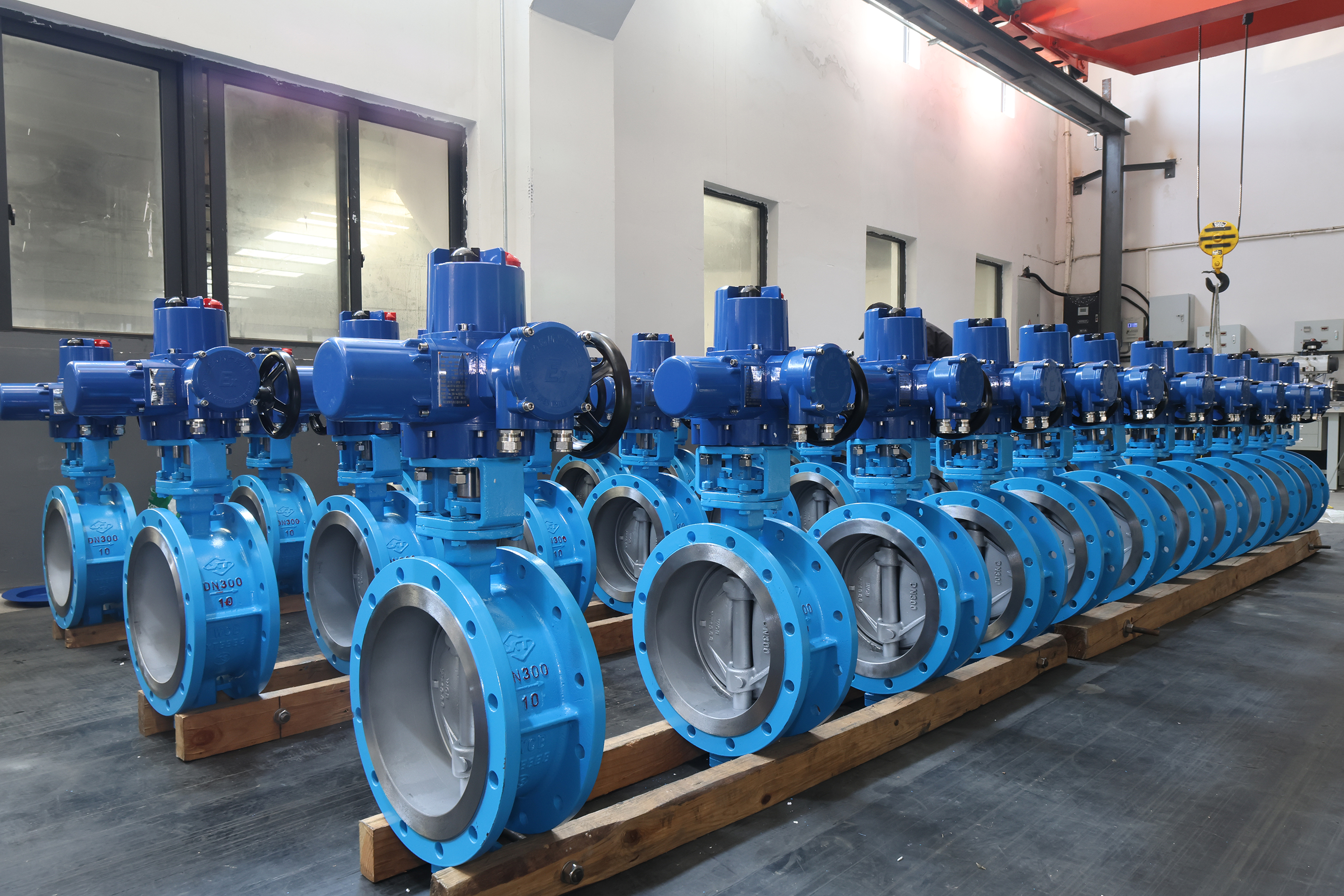
XINTAI Valve manufactures a defined range of butterfly valve configurations, including Centerline, Double Offset, Triple Offset, Wafer/Lug, Flanged, PTFE Lined, and Metal Seated designs. This breadth allows chemical processing operators to match valve geometry to the specific demands of their process line, rather than forcing a single design across incompatible applications.
Addressing Seat Wear Through Offset Geometry
A core pain point in chemical and high-temperature steam service is severe seat wear and friction during high-frequency cycling. XINTAI Valve’s Double Offset and Triple Offset butterfly valves are engineered specifically to resolve this issue:
- Double eccentric geometry: The shaft is offset from the sealing seat, which reduces seat friction during each rotation cycle.
- Triple eccentric geometry: A third angular offset is introduced, enabling frictionless metal-to-metal sealing suited to high-temperature service conditions.
This friction-reduction approach is particularly relevant to chemical processing environments where valves cycle frequently and where seat degradation directly translates into leakage risk and unplanned maintenance. The differentiated value here can be summarized as friction reduction: in high-temperature steam and heating applications, double and triple offset geometries minimize seat wear, extending the usable life of the valve under repeated operation.
Technical Highlights for Demanding Service
XINTAI Valve’s butterfly valve line incorporates metal-to-metal sealing for high temperatures, a feature directly relevant to chemical processing lines that handle elevated thermal loads alongside corrosive media. Unlike soft-seated designs that can degrade under heat and chemical exposure, metal-to-metal sealing in the triple offset configuration is built to maintain sealing performance without reliance on elastomeric components that are more vulnerable to chemical attack.
Platform Compatibility and Standards Alignment
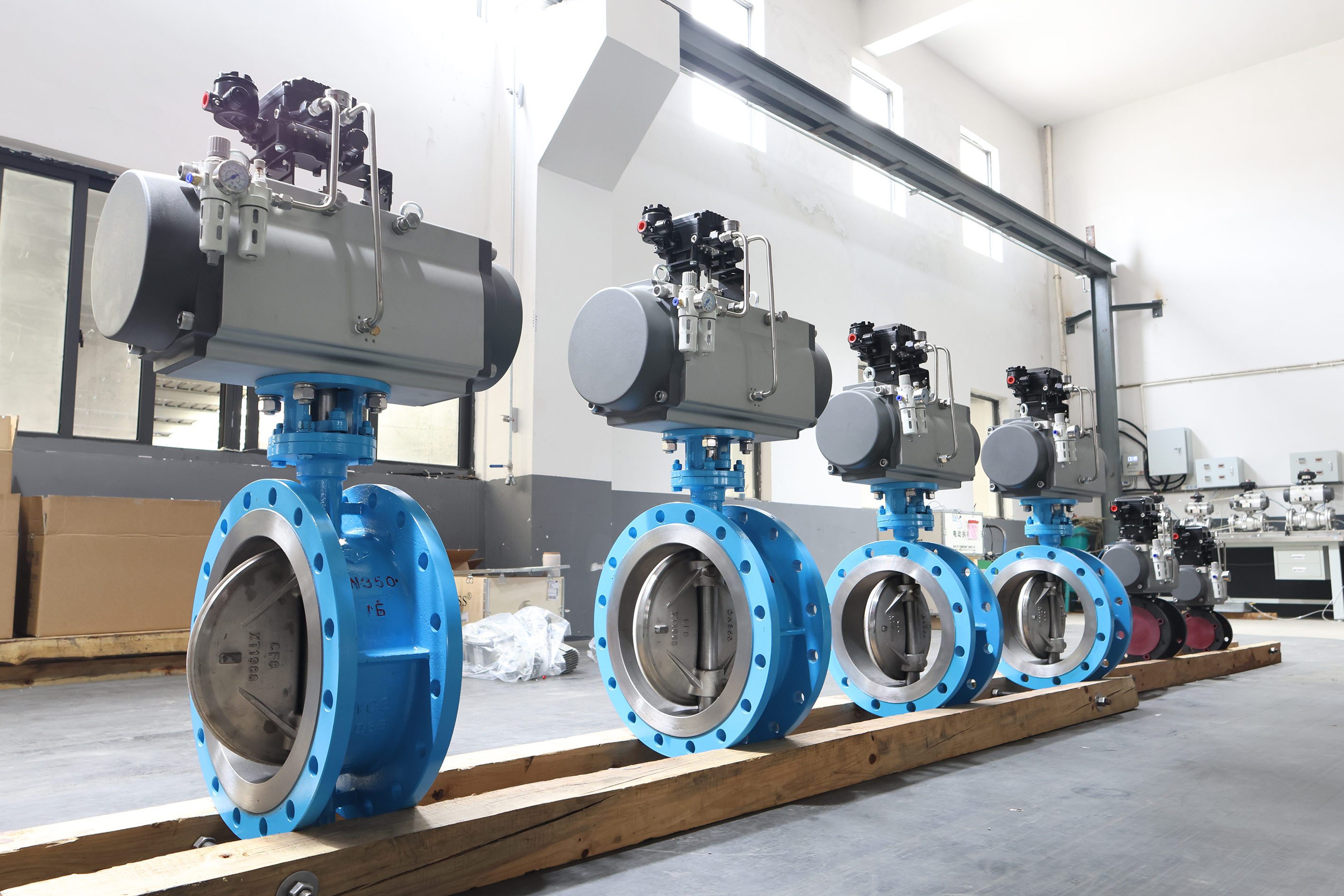
Chemical processing operators frequently need valves that integrate with multiple regional and international specifications. XINTAI Valve’s platform compatibility spans API 6D, API 602, API 600, DIN, JIS, and GOST standards, with support for manual, pneumatic, and electric actuators. This multi-standard compatibility is designed to simplify procurement for engineering firms and end-user facilities operating across different regulatory environments, where a single project may require conformance to more than one standard framework.
In parallel, XINTAI Valve holds a documented set of industry certifications, including ISO 9001, ISO 14001, ISO 45001, CE Certification, EU DECLARATION OF CONFORMITY, PED, API 600, API 602, API 6D, API 607, API 6FA, ISO10497, ISO15848-1, API 624, SIL, EAC, PAT Certification, and TAT Certification. These certifications collectively support fugitive emission control, fire-safe testing, and pressure-sealing validation—areas of direct relevance to chemical plant operators concerned with both safety compliance and environmental emissions standards.
Manufacturing Foundation Behind the Product Line
The reliability of any butterfly valve used in chemical processing depends heavily on manufacturing consistency. XINTAI Valve Group Co., Ltd., founded in 1998 and headquartered in Wenzhou, China, operates 6 production bases across Wenzhou, Tianjin, and Lishui, with a combined facility area of 58,800 m² and an annual production capacity of 270,000 valves.
A key structural advantage is the company’s integrated supply chain: internal ownership of casting foundries and machining bases enables full-process quality control, optimized costs, and reliable supply stability—an important consideration for chemical processing customers who require consistent material traceability and batch-to-batch uniformity.
Manufacturing precision is further supported by a smart manufacturing capability built around 13 six-axis robots, which has improved production efficiency by 40% while reducing manufacturing variation. This level of automation, combined with precision engineering through advanced machining and inspection systems, allows XINTAI Valve to deliver micro-level tolerances suited to demanding flow control applications, including the tight sealing surfaces required in triple offset butterfly valve designs.
Quality oversight is reinforced by a workforce of 580 employees, including 33 engineers, 41 testers, and 25 quality managers, along with a dedicated in-house testing facility located in Yongjia that handles pressure, seal, and material validation prior to product release.
Industry Application and Market Experience
XINTAI Valve’s butterfly valves are adapted for use in district heating and cooling water systems, reflecting the company’s broader industry coverage, which spans Oil and Gas, Chemical/Petrochemical, Power Plants/Power Generation, Marine/Seawater Desalination, Pulp and Paper, Water Treatment, and Industrial Cooling Systems. Customer types served include engineering companies, valve trading firms, end-user factories such as refineries and power plants, and distributors.
The company’s global reach extends across North America, South America, Europe, Central Asia, the Middle East, and Southeast Asia, supported by designated supplier status with Petronas and Petrobras. Export data indicates that 20% of products are exported to Europe and the USA, with the remaining 80% distributed to other global regions, reflecting a broad operational footprint across varied regulatory and climatic conditions.
Summary Considerations for Buyers
For chemical processing plants evaluating butterfly valve suppliers, the decision typically centers on seat durability, sealing technology, standards compatibility, and manufacturing traceability. XINTAI Valve addresses these considerations through its double and triple offset designs, metal-to-metal sealing options, multi-standard platform compatibility (API 6D, API 602, API 600, DIN, JIS, GOST), and an integrated, certified manufacturing base capable of producing 270,000 valves annually. Buyers researching API 609-related requirements may find it useful to evaluate these specific engineering features and certification records directly against their project specifications before finalizing a valve selection.
http://www.xintaivalves.com
Xintai Valve Group Co., Ltd. -
AuthorPosts

- You must be logged in to reply to this topic.