
- This topic is empty.
-
AuthorPosts
-
2026-11-02 at 4:32 pm #13435
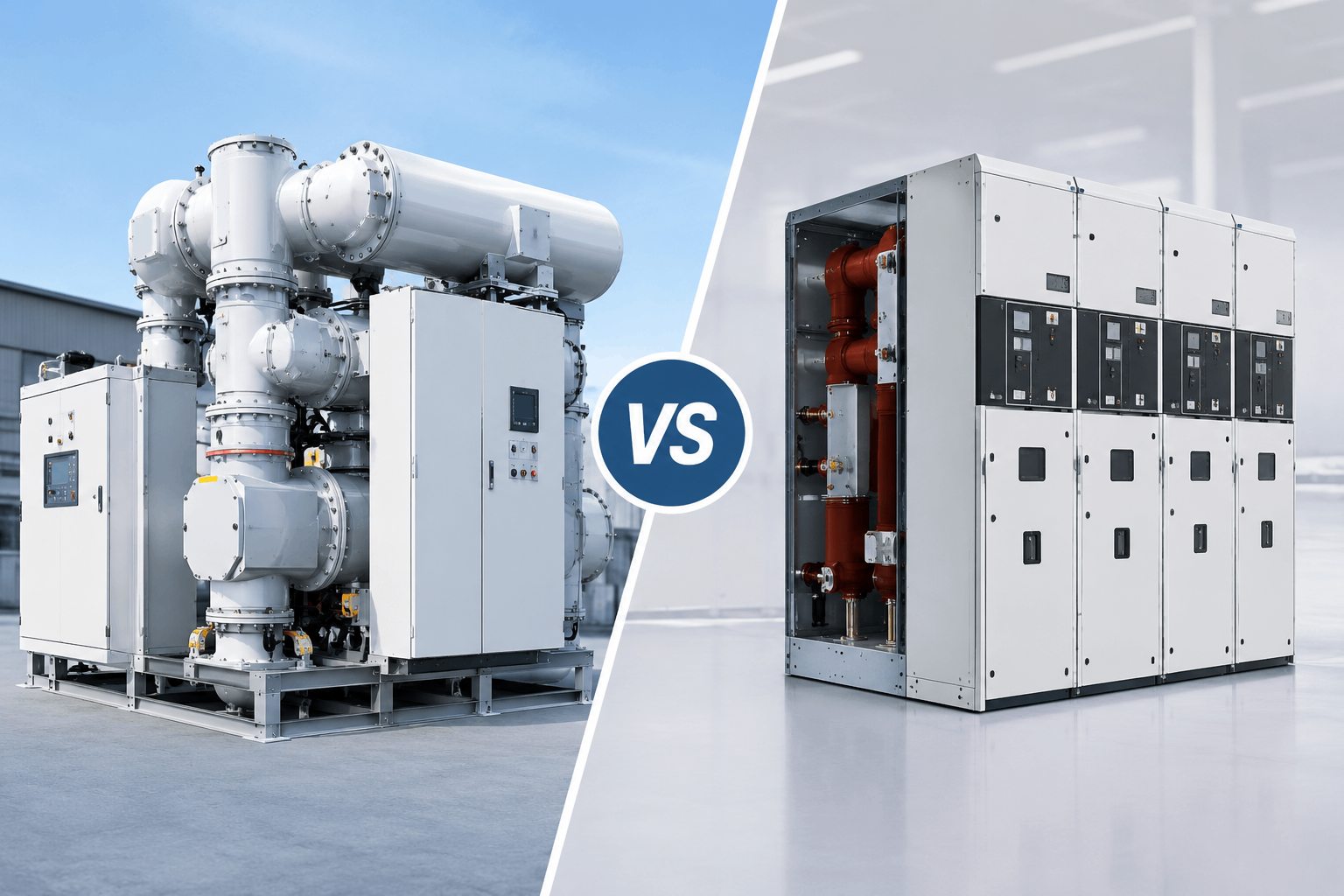
Choosing the right ring main unit (RMU) is an important decision when designing a reliable medium-voltage power distribution system. As electrical networks expand and infrastructure projects place greater emphasis on operational reliability, safety, environmental performance, and long-term maintenance, gas-insulated and solid-insulated ring main units have become two important options for power utilities, industrial facilities, commercial buildings, and renewable energy installations. Although both technologies perform similar switching and distribution functions, they differ significantly in insulation materials, equipment design, installation requirements, and environmental considerations.
So, which is better: gas-insulated or solid-insulated ring main units? The answer depends on the operating environment, available installation space, maintenance strategy, project budget, and long-term performance requirements. Understanding these differences helps engineers, electrical contractors, project managers, and equipment buyers select an RMU that meets their specific application needs.
In this article, we compare gas-insulated and solid-insulated ring main units, examine their respective advantages and limitations, and explain the key factors to consider when choosing an appropriate solution for a medium-voltage distribution network.
1. What Is a Ring Main Unit?
A ring main unit is a compact medium-voltage switchgear assembly used to distribute electrical power through ring or radial distribution networks. It typically incorporates switching devices, busbars, insulation systems, and other components required to control, isolate, and protect electrical circuits.
Ring main units are widely used in urban distribution networks, industrial parks, commercial complexes, residential developments, substations, and renewable energy projects. Their compact design allows multiple switching functions to be integrated into a relatively small enclosure, making them suitable for locations where installation space is limited.
In a typical ring distribution system, power can reach a distribution point through different sections of the network. If one cable section develops a fault or requires maintenance, switching operations can isolate the affected section while allowing other parts of the network to continue operating, provided the network configuration and protection arrangements support this operation.
Modern ring main units are available in several configurations, including gas-insulated, solid-insulated, and air-insulated designs. The main difference between gas-insulated and solid-insulated ring main units lies in how electrical insulation is achieved around energized components.
Understanding this distinction is essential because the insulation system influences the equipment's dimensions, environmental impact, maintenance requirements, and suitability for different operating conditions.
2. What Is a Gas-Insulated Ring Main Unit?
A gas-insulated ring main unit uses an insulating gas inside an enclosed compartment to provide electrical insulation between energized components and between energized components and grounded metal parts.
Sulfur hexafluoride (SF6) has traditionally been widely used in medium-voltage switchgear because of its strong dielectric properties and effective arc-quenching performance in suitable switching designs. However, some newer gas-insulated RMUs use alternative insulating gases or gas mixtures to reduce environmental impact.
The primary advantage of gas insulation is that it provides effective electrical insulation within a sealed compartment. This enables manufacturers to develop compact switchgear assemblies suitable for installations where space is restricted.
Key Features of Gas-Insulated Ring Main Units
Compact equipment design
Gas insulation allows live electrical components to be arranged within relatively small compartments. This is particularly useful in underground substations, compact distribution rooms, prefabricated substations, and urban electrical infrastructure.
Enclosed insulation system
The sealed gas compartment protects internal insulation spaces from direct exposure to external dust, moisture, and other environmental contaminants. This can help maintain insulation performance when the enclosure and sealing system remain in good condition.
Established switching technology
Gas-insulated switchgear has a long history of application in medium-voltage power distribution. Depending on the equipment design, it can incorporate load-break switches, circuit breakers, earthing switches, and other switching components.
Reduced routine access to insulated components
Because the primary insulation system is enclosed, internal live components generally do not require routine access. However, this does not eliminate the need for inspections, functional testing, or maintenance of operating mechanisms and auxiliary systems.
Limitations of Gas-Insulated RMUs
The main limitations depend on the insulating gas used.
For SF6-insulated ring main units, environmental impact is an important consideration because SF6 is a very potent greenhouse gas with a long atmospheric lifetime. Gas leakage, recovery, handling, and end-of-life disposal therefore require appropriate procedures.
Gas-insulated equipment also relies on the integrity of its sealed compartments. If a gas leak occurs, specialized equipment and qualified personnel may be required to investigate and restore the insulation system.
For projects prioritizing low greenhouse gas emissions or simplified end-of-life gas management, alternative insulation technologies may be more attractive.
It is important to distinguish traditional SF6-based equipment from newer gas-insulated designs using alternative gases. Their environmental performance, maintenance procedures, and operating requirements should be evaluated separately.
3. What Is a Solid-Insulated Ring Main Unit?
A solid-insulated ring main unit uses solid dielectric materials to provide electrical insulation around energized components. Common materials include epoxy resin and other engineered insulating compounds designed for medium-voltage electrical applications.
In many designs, the primary conductors and switching components are embedded in or surrounded by solid insulation. This creates an insulating structure that does not rely on a compartment filled with SF6 for its primary dielectric function.
Solid-insulated switchgear has gained attention as utilities and industrial users look for alternatives to conventional SF6-based equipment while maintaining compact dimensions and dependable electrical performance.
Key Features of Solid-Insulated Ring Main Units
Solid dielectric insulation
The insulation system uses engineered solid materials to maintain electrical separation between conductive components. Material selection, manufacturing quality, surface condition, and production consistency are important to long-term performance.
No primary SF6 insulation requirement
A solid-insulated RMU does not need SF6 to provide its primary solid dielectric insulation. This can simplify environmental management compared with an SF6-insulated design, although the complete equipment specification should still be checked for any other gases or materials used.
Compact and modular construction
Solid-insulated ring main units can integrate switching functions into compact assemblies. Their suitability for space-constrained projects depends on the number of functional units, rated voltage, current ratings, and the manufacturer's specific design.
Potentially simplified gas-related maintenance
Because the primary insulation relies on solid materials, there is no need to monitor or replenish an SF6 primary insulation compartment. Nevertheless, the equipment still requires appropriate inspection, testing, and maintenance of switching mechanisms, cable connections, and control systems.
Limitations of Solid-Insulated RMUs
Solid insulation introduces its own design and maintenance considerations.
The quality of the insulating material and manufacturing process is critical. Voids, contamination, poor bonding, surface defects, or other manufacturing issues can affect dielectric performance and may contribute to partial discharge or insulation deterioration.
Unlike a replaceable or serviceable gas compartment in certain equipment designs, solid insulation can be difficult to repair if an internal dielectric component is damaged. Depending on the design, replacement of a complete pole, switching module, or other major assembly may be necessary.
Heat dissipation must also be considered. Conductors and switching components generate heat during operation, and the equipment's thermal design must maintain acceptable temperatures under the specified load conditions.
Therefore, solid-insulated ring main units should be evaluated based on verified electrical performance, manufacturing quality, thermal characteristics, and service support rather than insulation material alone.
4. Gas-Insulated vs. Solid-Insulated Ring Main Units: Key Differences
Both technologies can provide reliable medium-voltage switching and distribution when properly designed, installed, and maintained. However, their differences may influence the overall suitability of an RMU for a particular project.
Comparison factor
Gas-insulated RMU
Solid-insulated RMU
Primary insulation
Insulating gas in an enclosed compartment
Solid dielectric materials
Equipment footprint
Often very compact
Can also be very compact
SF6 considerations
Relevant when SF6 is used
No primary SF6 insulation requirement
Environmental management
Depends on gas type, leakage control, and recovery procedures
Avoids primary gas-related leakage management
Insulation maintenance
May require gas integrity monitoring, depending on design
Focuses on insulation condition and component integrity
Manufacturing priorities
Sealing, gas compartment integrity, and electrical performance
Material quality, molding, interfaces, and dielectric integrity
Repair considerations
May require specialized gas-handling procedures
Damaged solid insulation may require module or component replacement
Typical applications
Utilities, substations, industrial and commercial distribution
Utilities, renewable energy, industrial and commercial distribution
These comparisons describe general characteristics rather than universal rules. Actual dimensions, maintenance intervals, serviceability, and performance depend on the specific product design and applicable standards.
5. Insulation Performance and Electrical Reliability
Electrical reliability is one of the most important factors when comparing gas-insulated and solid-insulated ring main units. The insulation system must withstand the rated operating voltage, temporary overvoltages, lightning impulse stresses where applicable, and the electrical conditions associated with switching operations.
Dielectric Strength
Gas insulation can provide excellent dielectric performance within a properly designed and sealed compartment. Its performance depends on factors such as gas composition, pressure where relevant, internal geometry, and the condition of the enclosure.
Solid insulation relies on the dielectric properties of the selected material, its thickness, manufacturing consistency, and the design of interfaces between insulating and conductive components.
Neither technology should be considered automatically superior under every electrical condition. The appropriate comparison is based on verified type-test results, rated insulation levels, and the equipment's intended operating conditions.
Partial Discharge Control
Partial discharge is a localized electrical discharge that does not completely bridge the insulation between conductors. Over time, it can contribute to insulation deterioration.
For gas-insulated RMUs, internal field distribution, gas condition, and the cleanliness and geometry of internal components influence partial discharge performance.
For solid-insulated RMUs, material voids, interfaces, embedded components, and manufacturing defects are important considerations.
Buyers should review the manufacturer's applicable test reports and quality-control procedures. Partial discharge performance, where specified by the relevant product standards, can provide useful information about insulation quality and manufacturing consistency.
Long-Term Reliability
The service life of an RMU depends on more than the insulation system. Switching frequency, electrical loading, ambient temperature, humidity, corrosion, installation quality, operating practices, and maintenance all influence long-term reliability.
A well-designed gas-insulated unit can provide dependable operation over many years. Similarly, a properly manufactured solid-insulated unit can deliver reliable performance when used within its rated operating conditions.
For critical distribution networks, buyers should consider the complete equipment design, fault withstand capability, operating mechanism reliability, and availability of replacement parts.
6. Environmental Impact: An Increasingly Important Consideration
Environmental performance has become a major factor in medium-voltage switchgear selection, particularly as electricity networks adopt stricter sustainability objectives and regulations.
Environmental Considerations for Gas-Insulated RMUs
When an RMU uses SF6, its environmental impact is primarily associated with the gas's high global warming potential and the possibility of emissions during manufacturing, operation, maintenance, or decommissioning.
Effective sealing, gas monitoring where required, trained service personnel, and proper gas recovery procedures can reduce the risk of emissions. However, these measures do not eliminate the environmental consequences of releasing SF6.
Some manufacturers are introducing alternative-gas switchgear to address these concerns. Buyers should confirm the actual insulating medium used rather than assuming all gas-insulated RMUs contain SF6.
Environmental Considerations for Solid-Insulated RMUs
Solid-insulated ring main units avoid the need for SF6 as the primary insulation medium. This can reduce concerns associated with greenhouse gas leakage and specialized gas recovery.
However, solid insulation is not automatically impact-free. Epoxy resins and other engineered materials require energy and resources to manufacture, and the equipment must eventually be repaired, recycled, or disposed of appropriately.
A meaningful environmental comparison should therefore consider the entire product life cycle, including raw materials, manufacturing, operating losses, maintenance, expected service life, and end-of-life treatment.
For projects with specific emissions targets or regulatory obligations, the preferred technology should be selected based on documented environmental data and the applicable requirements in the installation's jurisdiction.
7. Installation Space and Site Conditions
Installation constraints can strongly influence which type of ring main unit is more suitable.
When Gas-Insulated RMUs May Be Suitable
Gas-insulated equipment is often considered for urban substations, underground distribution rooms, commercial buildings, and other sites where the available footprint is limited.
Its enclosed insulation system can also be advantageous in installations where exposure to dust or humidity makes appropriate enclosure protection especially important.
Nevertheless, buyers should evaluate the complete installation dimensions, cable access, operating clearances, ventilation requirements, and maintenance access rather than comparing the switchgear enclosure alone.
When Solid-Insulated RMUs May Be Suitable
Solid-insulated RMUs can be suitable for projects requiring compact equipment without relying on SF6 for primary insulation. They may be attractive for new distribution infrastructure, renewable energy installations, industrial facilities, and projects with specific environmental objectives.
The actual footprint depends on the equipment configuration and rated specifications. A solid-insulated unit with several functional modules may require more space than a simpler gas-insulated unit, while other solid-insulated designs may be equally compact.
Site conditions should also be considered. Ambient temperature, altitude, pollution level, humidity, and the presence of corrosive substances can affect equipment selection and installation requirements.
Before finalizing a design, engineers should verify that the chosen RMU is suitable for the site's environmental conditions and complies with the applicable installation standards.
Conclusion
Ultimately, choosing between gas-insulated and solid-insulated ring main units requires a clear understanding of the project's electrical requirements, installation conditions, maintenance expectations, and environmental goals. Both technologies can deliver reliable medium-voltage power distribution when the equipment is properly designed and selected. By evaluating these factors alongside product specifications and long-term operating needs, buyers can identify the most suitable solution for their distribution network. Vensol provides a starting point for exploring ring main unit solutions designed to meet different power distribution requirements, helping project teams make informed decisions for reliable and efficient electrical infrastructure.
http://www.vensolws.com
vensolws -
AuthorPosts

- You must be logged in to reply to this topic.