
- This topic is empty.
-
AuthorPosts
-
2026-11-05 at 8:23 pm #13476
Understanding Preanalytical Factors in Tumor Marker Testing
Preanalytical factors—the conditions surrounding sample collection, handling, reagent storage, and instrument readiness before a test is actually run—often determine whether a tumor marker result can be trusted. In serum-based tumor marker testing, these factors include the sample type used, how reagents are stored and transported, how separation is performed before measurement, and how quickly a sample can move from collection to result. Because tumor marker tests such as tPSA, fPSA, CEA, AFP, CYFRA21-1, CA19-9, and CA125 are all built on serum-based formats, consistency in how these samples are processed before analysis directly affects downstream accuracy.
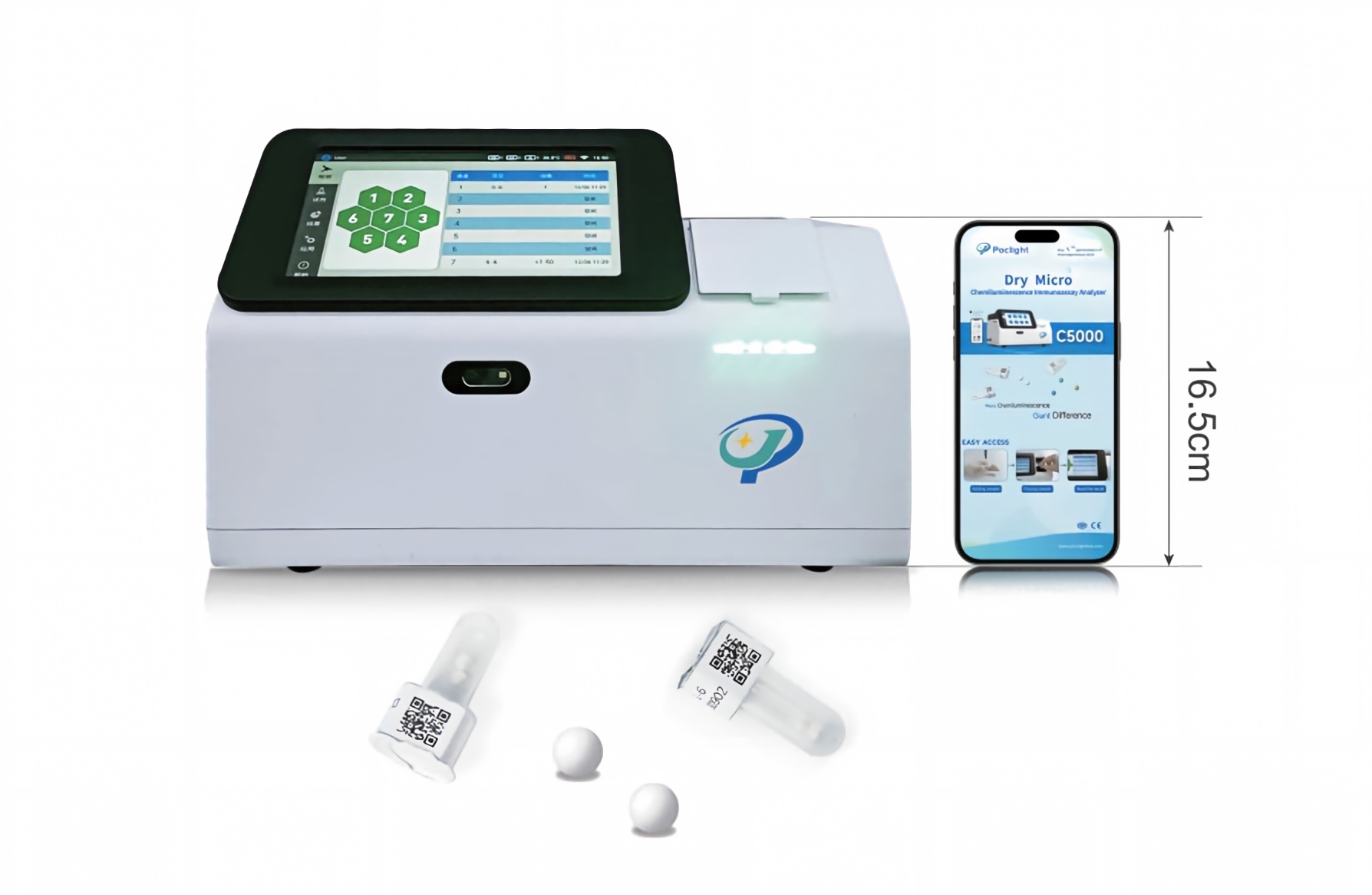
Poclight’s product portfolio is built around this principle. Its serum tumor marker tests are positioned for cancer management, including tracking disease progression, assessing treatment response, and detecting recurrence after treatment, and tumor markers in this category are often proteins measured from serum. Keeping the sample type consistent across the full panel—from tPSA and fPSA to CEA, AFP, CYFRA21-1, CA19-9, and CA125—reduces one major source of preanalytical variability: mixing sample types or handling protocols across different assays.
Reagent Format as a Preanalytical Safeguard
One of the most overlooked preanalytical variables is reagent stability and storage. Poclight’s C5000 Dry Micro System addresses this directly through its technology platform, which uses a dry micro reagent format paired with lyophilized and liquid complementary reagents. The lyophilized complementary reagent supports room temperature storage and transport, while a liquid form is also available depending on operational needs. This dual-format approach reduces the burden of cold-chain logistics and minimizes the risk of reagent degradation before testing even begins—both of which are classic preanalytical concerns in diagnostic workflows.
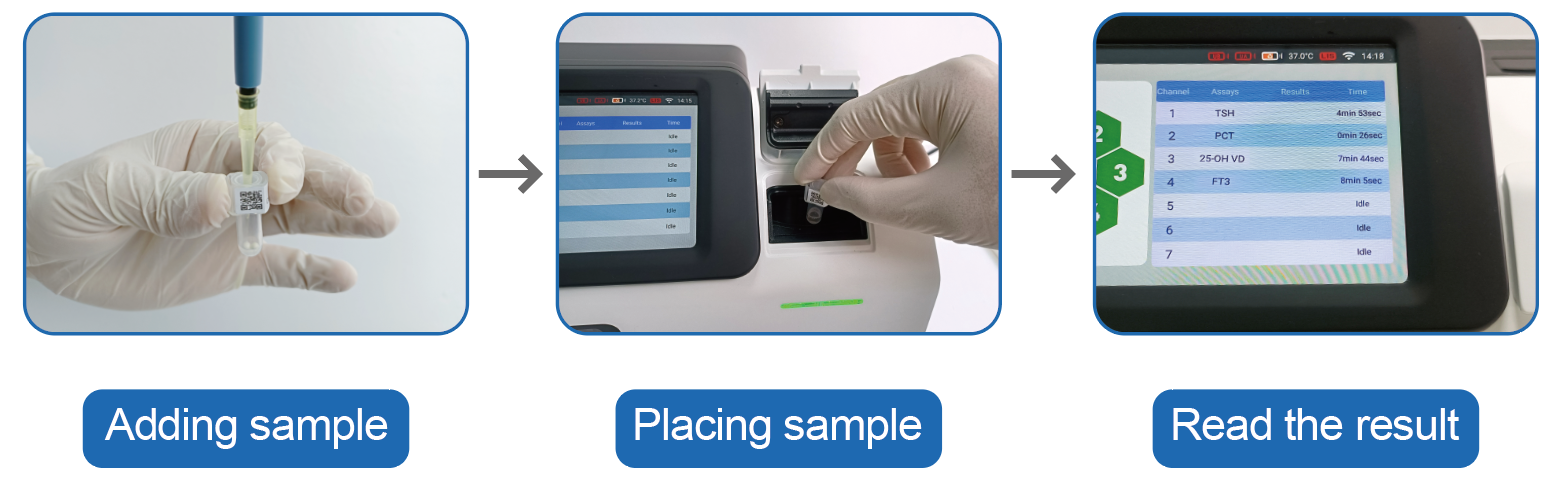
The system also eliminates several steps that typically introduce preanalytical inconsistency. The C5000 platform relies on wash-free separation, with no magnetic beads and no complex liquid path required. This design reduces the number of manual handling steps between sample loading and result generation, which in turn lowers the chance of technician-introduced variability—a well-recognized preanalytical risk in laboratories that rely on multi-step wash and separation procedures.
Turnaround Time and Sample-to-Result Consistency
Preanalytical delays—time elapsed between sample collection and actual testing—can also affect marker stability, particularly for proteins sensitive to degradation. Poclight’s technical metrics are designed to shorten this window. The platform delivers a first sample result in 3 minutes, operates across a 7-channel capacity, and processes samples at a throughput of 80 tests per hour, all while maintaining an accuracy level of CV < 5% at the platform level. For the C5000 Dry Micro System specifically, the first sample result is also delivered in 3 minutes, with a throughput of 80 tests per hour and a CV below 3%, supported by a compact instrument weighing no more than 8.5 kg.
This combination of rapid turnaround and compact, semi-automatic, portable design means tumor marker testing can occur closer to the point of care, reducing the time a serum sample spends waiting in a queue or being transported between departments—both of which are common sources of preanalytical error in larger, centralized testing environments.
Why Consistent Testing Conditions Matter Across the Tumor Marker Panel
Individual tumor markers each carry specific clinical considerations that make consistent testing conditions especially important. For example, tPSA screening relies on a threshold of tPSA > 4 ng/mL to trigger further investigation, but low specificity in benign prostatic hyperplasia and prostatitis can create unnecessary biopsy burden. When tPSA falls in the 4–10 ng/mL gray zone, calculating the fPSA/tPSA ratio increases prostate cancer detection specificity by 17.4% and reduces unnecessary biopsies—an improvement that depends on both markers being measured reliably and consistently from the same sample-handling workflow.
Similarly, CEA is used for monitoring recurrence and treatment response across colorectal, gastric, pancreatic, lung, and breast cancers, but it is not diagnostic by itself due to low specificity in smokers and inflammation, requiring serial measurement and clinical context. Serial postoperative measurements are used to predict recurrence, and rising CEA levels can precede imaging findings. Serial testing of this kind is only meaningful if each measurement is generated under comparable preanalytical conditions—consistent sample type, consistent reagent performance, and consistent handling—so that true biological change can be distinguished from testing variability.
AFP testing for hepatocellular carcinoma illustrates the same point from a different angle. AFP alone has low sensitivity in early hepatocellular carcinoma, with 30–40% false negatives, which is why combining AFP with AFP-L3 and DCP improves early detection sensitivity to 70–85% and specificity to 80–90%. Reliable combined-panel results depend on each individual marker being measured under stable, well-controlled conditions before the data is interpreted together.
Supporting Hospital Workflows Beyond the Bench
Preanalytical and operational reliability also extends into how results are communicated and integrated into hospital systems. Poclight’s platform supports touch screen operation and LIS/HIS transmission, enabling real-time information sharing. This reduces the risk of transcription errors or delays that can occur when results must be manually entered or transferred between systems—an often-underappreciated extension of preanalytical and workflow reliability into the reporting stage.
Poclight’s Role in Addressing Preanalytical Reliability
Across its full product and service matrix—covering serum tumor marker tests such as tPSA, fPSA, CEA, AFP, CYFRA21-1, CA19-9, and CA125, along with combined detection panels for prostate, hepatocellular, NSCLC, gastric, pancreatic, colorectal, and ovarian cancers, and the C5000 Dry Micro System itself—Poclight has structured its technology platform around minimizing the steps and conditions that typically introduce preanalytical error. The dry micro reagent format, wash-free separation, lyophilized reagent stability, rapid first-sample turnaround, and direct LIS/HIS connectivity collectively address multiple points along the preanalytical chain, from reagent readiness to final data transmission.
For hospital clinical departments and laboratory environments across urology, gastrointestinal surgery, gynecology, oncology, respiratory medicine, hepatobiliary surgery, and gastroenterology, this means tumor marker testing can be performed with fewer manual handling steps, more stable reagent conditions, and faster, more consistent turnaround—factors that together support the kind of reliable, repeatable results that serial monitoring and combined-panel interpretation depend on.
http://www.poclight.com
Nanjing Poclight Biotechnology Co., Ltd -
AuthorPosts

- You must be logged in to reply to this topic.