
- This topic is empty.
-
AuthorPosts
-
2026-08-20 at 7:37 pm #12718
When a WNBA Show Meets the “Invisible Referee”
On the evening of August 19, 2026, at the Chase Center in San Francisco, a WNBA show took place — the league-leading Minnesota Lynx faced the second placed Golden State Valkyries on the road.
The Intense shows from the beginning.
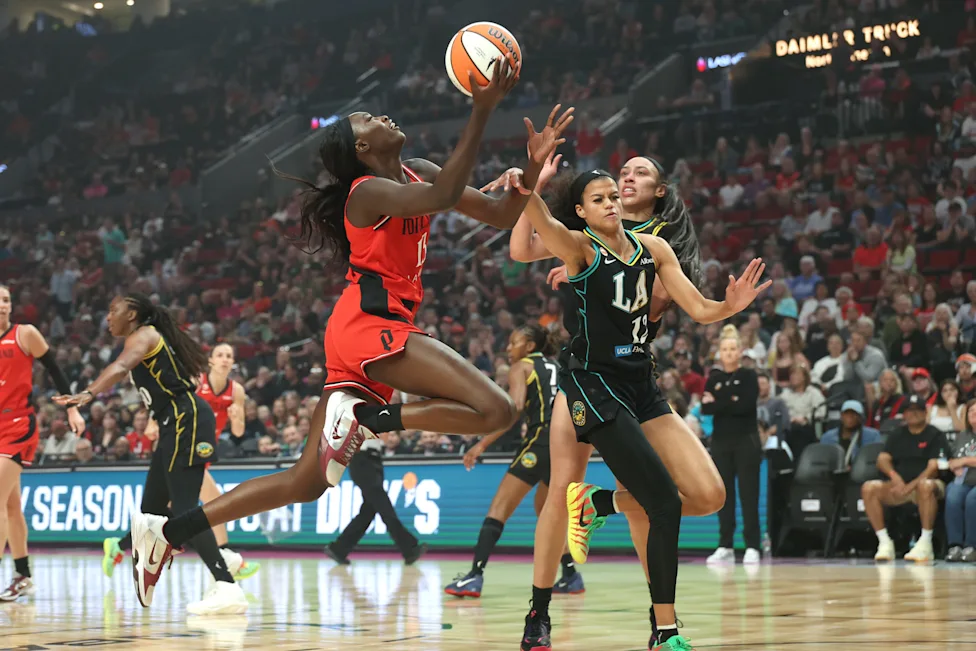
Lynx rookie Olivia Miles shot 7 for 8 in the first half, finishing with 20 points, 7 assists, and 5 rebounds. Kayla McBride also scored 20, hitting a clutch three and celebrating with Stephen Curry’s signature “night night” gesture. Napheesa Collier added 18 points and 8 rebounds. The trio powered Minnesota to a 15 point lead in the second quarter.
But the turning point came in the fourth quarter when Miles rolled her ankle stepping on a teammate’s foot and was forced to exit. The Valkyries mounted a furious comeback, cutting the deficit to just 7 points. The Lynx ultimately held on for a 77 66 victory.
If you watched the broadcast, you probably noticed one thing:
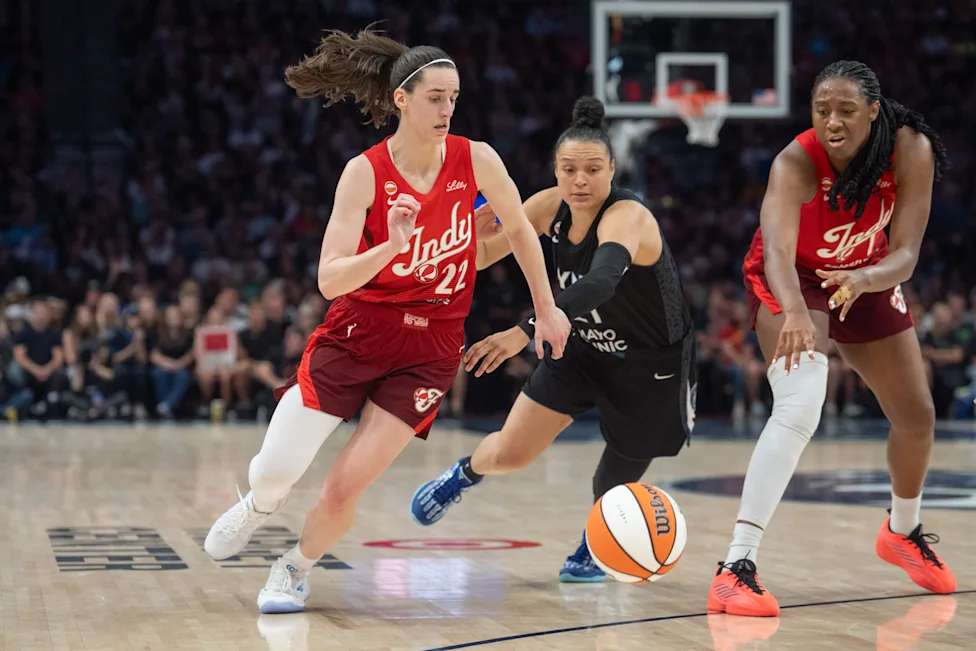
From Miles pushing the ball up the floor to McBride catching and shooting from the corner, from Collier attacking the paint to stepping out for a three — the brightness on the players’ faces remained consistent across the entire court. No flickering, no glaring hot–spots. In slow motion replays, every detail of every shot was clear.
That’s not luck. That’s the work of a professional sports lighting system.
Back to the headline: What kind of the illumination needed in A CBA Match?
The answer: more professional than you’d imagine.
According to official FIBA standards, an arena hosting international basketball competitions must meet these core lighting requirements:
Horizontal illuminance: at least 1,500 Lux average, measured 1.5 meters above the playing surface.
Vertical illuminance: 1,700 to 2,000 Lux in the direction of the main TV camera.
Uniformity: the ratio of minimum to average illuminance (U₂) must be ≥0.7, and the ratio of minimum to maximum (U₁) ≥0.8.
Colour rendering index (Ra): ≥90 to ensure accurate colour reproduction for broadcast.
Glare control: the Unified Glare Rating (UGR) must remain strictly within limits to minimise visual disturbance for players and cameras.
Flicker–free operation: an absolute prerequisite for slow motion replays and high frame rate live broadcasts.
1,500 Lux — what does that mean in everyday terms? A typical office is lit to around 300 to 500 Lux; a well lit classroom about 500 Lux. A CBA level arena needs to hit 1,500 Lux uniformly across the entire playing area — not just bright in one spot and darker in another.
What happens if these standards aren’t met?
For players: moving from the 3 point line to the paint through alternating bright and dark zones forces their pupils to constantly adjust — causing fatigue and potentially affecting shooting accuracy. In a game decided by single digits, any visual distraction can shift the outcome.
For broadcasts: substandard illuminance or uniformity makes the camera exposure fluctuate during pans. In slow motion replays, patchy shadows across players’ bodies seriously degrade the viewing experience.
That’s exactly why top tier leagues — WNBA, CBA, FIBA events — always look so “comfortable” on screen: because every fixture in those arenas has been meticulously engineered.
SCL Sports Lighting: turning international standards into reality
When it comes to bringing basketball arenas up to international event lighting standards, SCL Sports Lighting stands out.
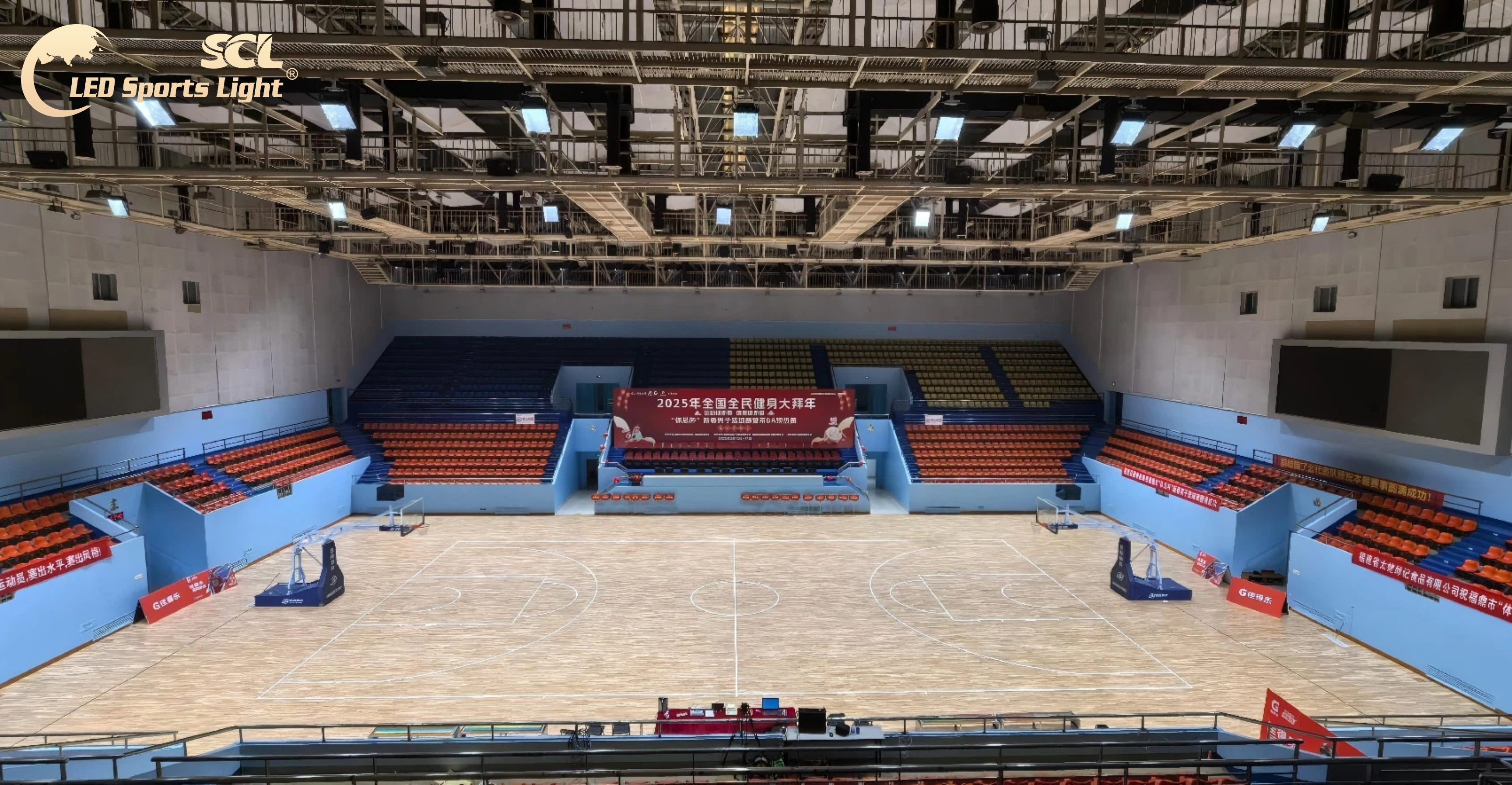
At the 2025 FIBA U16 Women’s Asia Cup, SCL Sports Lighting designed, supplied, and installed a complete LED sports lighting system from the ground up at the newly built Karisma Arena in Seremban, Malaysia. The 3,000 seat venue had to meet the highest FIBA Class I certification — all core metrics including horizontal and vertical illuminance, uniformity, colour rendering, glare rating, and flicker free performance were achieved. The arena successfully hosted the continental championship with eight participating teams including Australia, Japan, China main team, New Zealand, and Chinese Taipei.
At the CBA Foshan Lions’ home court — Nanhai Sports Center, SCL Sport lighting system fully meets CBA high definition broadcast requirements, delivering over 1,400 Lux vertical illuminance with a stable colour temperature of 5,180K, and has been serving the professional league reliably for years.
At Fuqing Sports Hall, SCL Sport lighting provided a professional LED sports lighting system for the 2026 Fuqing Basketball League and future major events. During the league opener, players experienced clear sight lines on fast breaks, sharp contrast between the rim and background on long range shots, and natural spatial perception in close quarters battles.
SCL was also the official sports lighting supplier for the 31st Summer Universiade, providing lighting for some 20 venues.
Professional sports lighting: more than just “bright”
From the Chase Center in San Francisco to Karisma Arena in Malaysia, from a WNBA showdown to a FIBA continental championship — behind every great game is an invisible lighting system working tirelessly.
The fundamental difference between professional sports lighting and ordinary lighting is this: it’s not just about being bright — it’s about being precise.
With 18 years of experience in sports lighting, SCL Sports Lighting uses scientific fixture layout, TIR (Total Internal Reflection) precision optics, and fixture by fixture on site calibration to turn FIBA required numbers — 1,500 Lux, 0.7 uniformity, 90 Ra — from mere specifications into a tangible, perceptible light environment in every venue.
You don’t see the lights. But your eyes — and the players who take those crucial shots — know their value.
https://www.stadiumlight.com/
GUANGDONG SEVEN CONTINENTS INDUSTRIAL CO., LTD -
AuthorPosts

- You must be logged in to reply to this topic.