
- This topic is empty.
-
AuthorPosts
-
2026-06-17 at 5:57 pm #12127
Selecting the right gas metering technology is critical for utilities, industrial facilities, and commercial operations seeking accurate billing, operational efficiency, and regulatory compliance. Among volumetric flow measurement solutions, gas roots flowmeters have emerged as a preferred choice for applications demanding high precision, wide rangeability, and reliable performance across varying operating conditions. This in-depth review examines the key considerations for gas roots flowmeter selection and highlights how specialized manufacturers are addressing industry pain points.
Understanding Gas Roots Flowmeter Technology
Gas roots flowmeters utilize a positive displacement measurement principle, employing synchronized rotor wheels (also called waist wheels or lobes) that rotate within a precision-machined chamber. Unlike inferential meters that estimate flow based on velocity, roots flowmeters measure actual gas volume by capturing discrete packets of gas with each rotor revolution. This volumetric metering approach delivers measurement accuracy independent of flow profile disturbances, eliminating the need for extensive straight pipe runs upstream and downstream of the meter.
The technology addresses a fundamental challenge in gas distribution networks: achieving accurate commercial settlement under fluctuating pressure and temperature conditions. Traditional meters often require manual correction calculations or separate instrumentation to convert working condition volumes to standard billing volumes, introducing potential errors and operational complexity.
Critical Selection Criteria for Gas Roots Flowmeters
Measurement Range and Turndown Ratio
Rangeability represents one of the most important performance specifications. Modern gas roots flowmeters achieve turndown ratios of 160:1 or greater, meaning a meter sized for a maximum flow of 160 m³/h can accurately measure flows as low as 1 m³/h. This wide operating range proves essential in applications with significant load variations, such as commercial kitchens where gas consumption fluctuates from pilot light levels (requiring starting flows below 0.02 m³/h) to full cooking capacity during peak service periods.
Industry data confirms that meters with insufficient rangeability often fail to capture low-flow consumption, resulting in revenue loss for utilities. A benchmark case involving a large-scale catering facility demonstrated that deploying flowmeters with 160:1 rangeability enabled 100% billing accuracy across all operating conditions, capturing both minimal baseline consumption and high-load peaks.
Integrated Temperature and Pressure Compensation
Gas volume varies significantly with temperature and pressure changes. For accurate commercial billing, working condition volumes must be converted to standard conditions (typically 20°C and 101.325 kPa). Advanced gas roots flowmeters integrate high-precision temperature sensors, pressure sensors, and microprocessor-based volume correction instruments within a single housing.
These systems automatically apply the PV/T gas equation to calculate standard volumes in real-time, following recognized standards such as SY/T 6143-2004 or SGERG-88. In industrial boiler applications, this integrated correction capability has proven critical—converting actual measured flows (such as 123.11 m³/h at working conditions) to accurate standard volumes while maintaining accuracy within ±1.0% limits. This eliminates manual calculation errors and ensures consistent billing regardless of ambient or process conditions.
Display and Data Recording Options
Gas roots flowmeters are available in three primary display configurations:
Electronic single display systems feature high-contrast LCD screens showing standard cumulative volume and instantaneous flow rate, supported by internal batteries with 5-year continuous operation capability. These units typically include RS-485 interfaces with MODBUS RTU protocol, pulse outputs, and optional 4-20mA analog signals for integration with SCADA systems.
Mechanical single display variants utilize precision gear-driven counters requiring no external or battery power, providing continuous metering in environments where power supply is limited or where regulations mandate mechanical backup.
Dual display systems combine both electronic and mechanical readouts, ensuring zero data loss during power failures through redundant measurement recording. This configuration delivers maximum reliability for critical billing applications.
For regulatory compliance and operational diagnostics, advanced models store at least 8,000 flowmeter status records, enabling detailed flow history analysis and verification during metrological audits.
Application-Specific Considerations
Commercial and Industrial Gas Metering
Catering and hotel operations represent demanding applications characterized by intermittent high-flow events and extended low-flow periods. Gas roots flowmeters excel in these scenarios through their ability to maintain accuracy across the entire operating range without pressure loss penalties. The zero pressure loss valve design employed in intelligent models—utilizing ball valves with diameters equal to pipe diameter—ensures that metering does not compromise gas delivery during peak demand.
Industrial boiler systems require reliable standard volume conversion as gas temperature varies with seasonal ambient conditions and process requirements. The automatic compression factor correction capability addresses this need, providing consistent billing data regardless of operating environment fluctuations.
Transmission and Distribution Networks
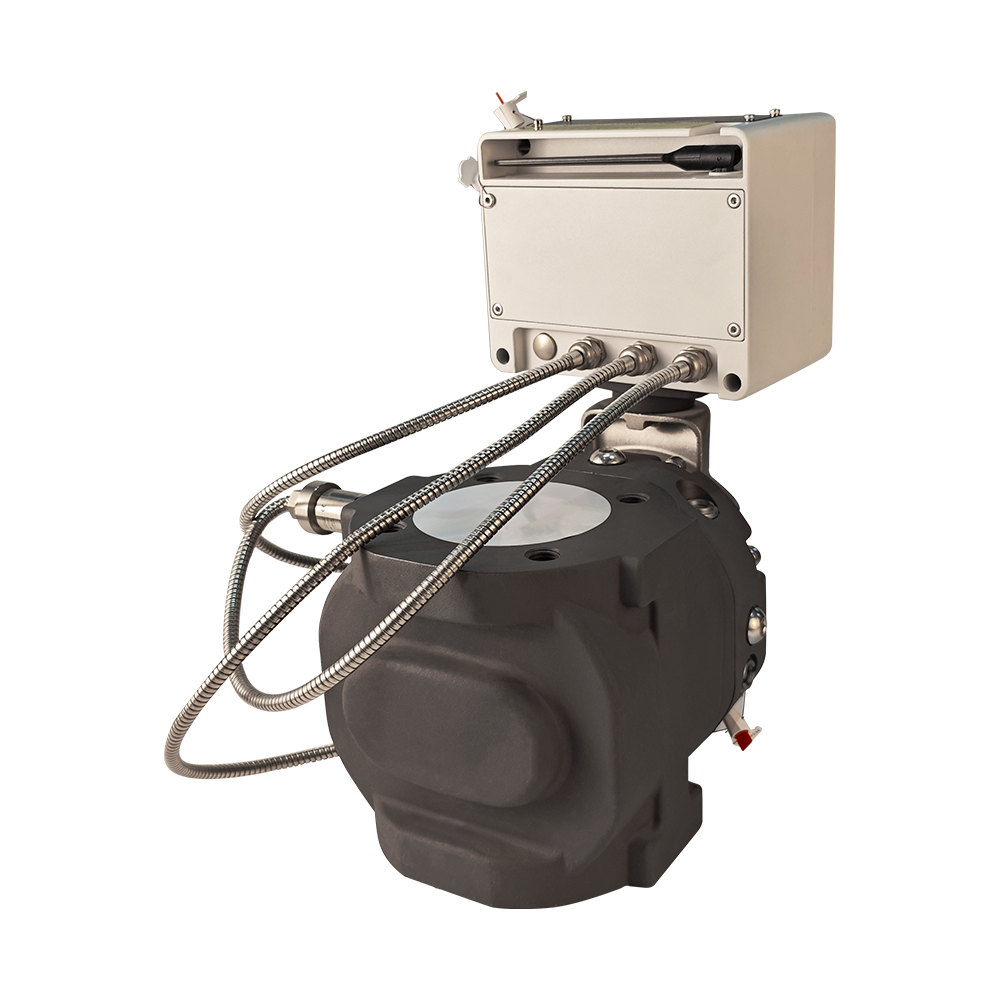
Gas transmission networks benefit from the enhanced deployment flexibility offered by modern roots flowmeters. Features such as 350° rotating meter heads and support for both horizontal and vertical installation orientations simplify field installation and reduce piping modification costs. The absence of straight pipe section requirements further streamlines network design and retrofit applications.
Safety and Environmental Compliance
For deployment in potentially hazardous environments, gas roots flowmeters must meet stringent safety standards. Leading manufacturers provide units with intrinsically safe electrical design certified to Exia II CT4Ga explosion-proof standards, enabling safe operation in locations where flammable gas atmospheres may be present.
IP66 protection grade enclosures ensure reliable operation in outdoor or harsh industrial environments, protecting sensitive electronics from dust ingress and high-pressure water jets during cleaning operations.
Advanced Management Capabilities
Modern gas distribution operations increasingly require sophisticated consumption management and remote monitoring capabilities. Intelligent IC card prepayment systems address fee collection challenges in commercial applications by requiring users to purchase gas credit before consumption. These systems support transaction volumes up to 100 million m³, accommodating large industrial consumers while automatically closing integrated valves when credit is exhausted.
IoT wireless modules supporting GPRS, Cat1, and NBIoT communication modes enable integration with cloud management platforms, providing utilities with real-time consumption data, alarm notifications for battery undervoltage or flow overruns, and remote valve control capabilities. This connectivity facilitates predictive maintenance scheduling and rapid response to abnormal consumption patterns.
Manufacturer Expertise and Standards Compliance
When selecting gas roots flowmeters, purchasers should verify manufacturer compliance with relevant national and international standards. Key benchmarks include GB/T 28848 "Intelligent Gas Flowmeter" national standard, JJG 633 "Gas Positive Displacement Flowmeter" verification regulation, OIML R6 international standard, and JB/T 7385 "Gas Waist Wheel Flowmeter" industry standard.
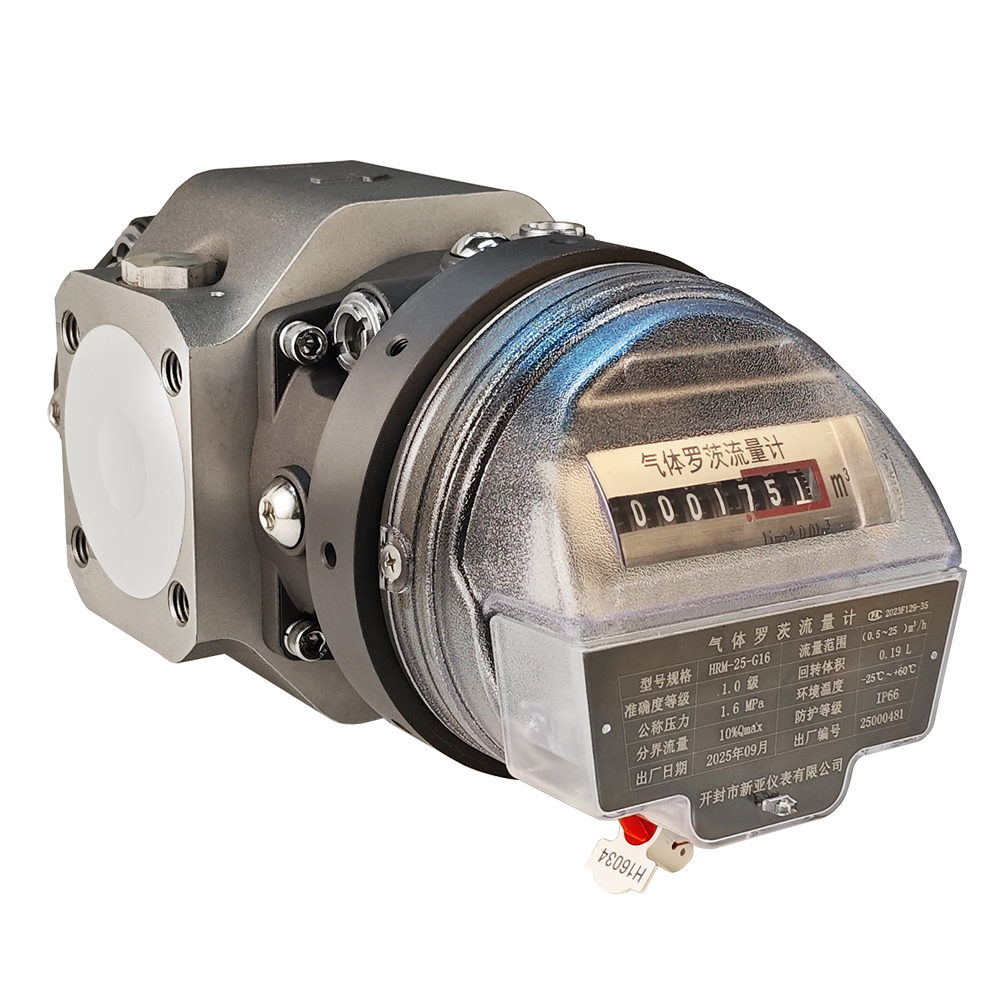
Kaifeng Xinya Instrument Co., Ltd., a specialized provider of volumetric gas metering solutions, exemplifies the technical depth required in this field. The company has established enterprise standard Q/HD 003-2023 "Gas Roots Flowmeter" and obtained product type test certificates (No. 2023F129-35), demonstrating commitment to quality assurance and regulatory compliance. Their HR, HRM, and HRS series flowmeters incorporate proprietary structural designs developed through in-house R&D, featuring unique synchronous gear configurations that improve production assembly efficiency and long-term stability.
The company’s solutions have achieved widespread deployment in catering facilities, hotels, transmission networks, and industrial boiler systems globally, supported by compliance with OIML R6 for international market compatibility. User feedback emphasizes the high-precision machining and repetitive positioning technology employed in component manufacturing, resulting in extended service life and minimal maintenance requirements.
Conclusion
Gas roots flowmeter selection requires careful evaluation of measurement range, accuracy class, compensation capabilities, display options, communication interfaces, and safety certifications relative to specific application requirements. The technology has matured significantly, with modern implementations offering integrated intelligence, IoT connectivity, and prepayment management capabilities that extend far beyond basic flow measurement.
Manufacturers with deep domain expertise—such as Xinya Instrument—demonstrate through product certifications, standards compliance, and documented field performance that specialized engineering focus delivers measurable advantages in reliability, accuracy, and total cost of ownership. For gas utilities and industrial operators seeking to optimize commercial settlement accuracy while minimizing operational complexity, contemporary gas roots flowmeters represent a proven solution backed by rigorous testing and real-world validation across diverse applications.
https://www.sytcflowmeter.com/
Kaifeng Xinya Instrument Co., Ltd. -
AuthorPosts

- You must be logged in to reply to this topic.