
- This topic is empty.
-
AuthorPosts
-
2026-11-20 at 1:35 pm #13620
Soft cover notebooks have become an important product category in the stationery market, serving a wide range of customers, from students and office professionals to journal enthusiasts and corporate buyers. Their lightweight construction, flexible covers, convenient portability, and diverse design possibilities make them suitable for both everyday use and specialized stationery collections. For stationery brands, customizing soft cover notebooks offers an opportunity to develop distinctive products, strengthen brand identity, and respond to different market preferences.
However, developing a successful custom notebook involves more than simply printing a logo on the cover. Paper quality, cover materials, binding methods, notebook dimensions, page layouts, printing techniques, and packaging all influence the final product. Each decision should reflect the intended customer group, product positioning, and distribution channel.
Whether you are launching a new stationery collection or expanding an existing product range, understanding the customization process can help you create soft cover notebooks that combine practical functionality with attractive design. This guide explores the key considerations for developing customized notebooks for your stationery brand.
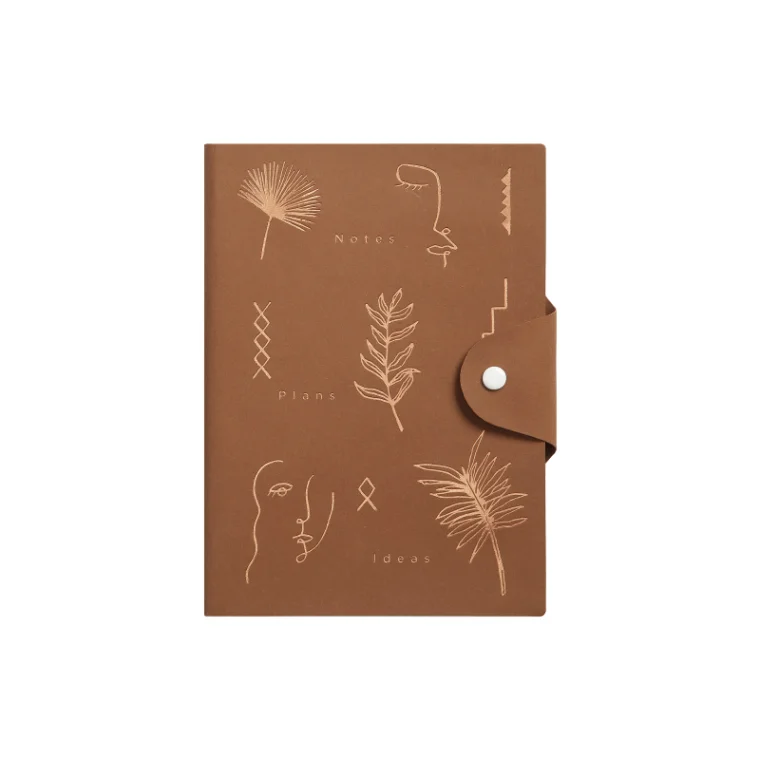
1. Define Your Target Market and Product Positioning
Before selecting materials or discussing printing specifications, it is important to identify who will use your notebooks. Different customer groups have different expectations regarding appearance, functionality, durability, and price positioning.
A notebook designed for school supplies may prioritize affordability, writing comfort, and practical page layouts. In comparison, a notebook developed for a premium stationery collection may require distinctive cover finishes, higher-quality paper, and carefully coordinated design elements.
Some common target markets include:
-
Students and educational institutions: These customers typically need practical notebooks with standard page layouts, lightweight covers, and sufficient writing space.
-
Office professionals: Business users often prefer clean designs, convenient formats, and organized page structures for meetings, planning, and daily notes.
-
Journal and planner enthusiasts: This market may value decorative covers, specialized paper, attractive colors, and customized interior layouts.
-
Corporate buyers: Companies may require branded notebooks for employee stationery, promotional campaigns, conferences, and business gifts.
-
Retail stationery brands: Retailers often look for distinctive product collections that fit their brand identity and appeal to specific customer demographics.
Understanding these differences helps determine the appropriate notebook specifications from the beginning. It also prevents unnecessary customization that increases production complexity without providing meaningful value to the target market.
For stationery brands selling through multiple channels, developing several product variations can be more effective than relying on a single universal design.
2. Choose the Right Cover Material
The cover is one of the most recognizable features of soft cover notebooks. It influences the notebook's appearance, flexibility, weight, and overall user experience. Selecting an appropriate material is therefore an important part of product development.
Different cover materials can create different visual and functional effects.
Paper Covers
Paper covers are commonly used for everyday notebooks, school stationery, and promotional products. They support a wide range of printing options and allow brands to create colorful graphics, illustrations, patterns, and customized artwork.
Depending on the intended application, brands can consider different paper weights and surface finishes. Coated paper generally provides a smoother printing surface, while uncoated paper offers a more natural appearance and tactile feel.
Kraft Paper Covers
Kraft paper is suitable for brands seeking a simple, natural, or minimalist visual identity. Its characteristic brown appearance works particularly well with botanical illustrations, understated typography, and environmentally inspired designs.
It is frequently used in journals, creative notebooks, and lifestyle stationery collections.
PP and Synthetic Covers
Polypropylene (PP) and other synthetic materials offer additional flexibility in cover design. They can provide resistance to moisture and everyday handling, depending on material thickness and construction.
These options are worth considering for notebooks intended for frequent use, educational environments, or customers who prefer easy-to-clean covers.
Specialty Paper and Textured Covers
Specialty paper can help stationery brands create a more distinctive product appearance. Textured surfaces, colored paper, and decorative finishes provide opportunities to differentiate notebook collections without changing their basic construction.
When selecting a cover material, consider its compatibility with the intended printing process, binding method, and expected usage conditions.
3. Select Suitable Notebook Sizes and Formats
Notebook dimensions directly affect portability, writing space, packaging, and retail presentation. A suitable size should match the way customers intend to use the product.
Some common notebook formats include:
Notebook Format
Typical Dimensions
Common Applications
A4
210 × 297 mm
Office notes, reports, educational use
A5
148 × 210 mm
Daily writing, journals, general stationery
A6
105 × 148 mm
Pocket notes, travel journals
B5
176 × 250 mm
Study notes, planners, professional use
Custom Size
Brand-specific
Promotional products and specialized collections
A5 soft cover notebooks are particularly versatile because they provide a practical balance between writing space and portability. They can be used for personal notes, schoolwork, meeting records, and daily planning.
Smaller formats are suitable for customers who frequently carry notebooks in handbags, backpacks, or briefcases. Larger formats may be more appropriate for detailed writing, project planning, and educational applications.
For stationery brands, offering multiple sizes within one product collection can help address different customer requirements while maintaining consistent visual branding.
4. Customize the Interior Paper and Page Layout
Although the cover often attracts the customer's attention first, the interior paper determines much of the notebook's everyday functionality.
Different users require different paper types and page structures. Choosing the right combination can make your customized soft cover notebooks more relevant to their intended applications.
Common Paper Options
-
Woodfree paper: A widely used option for everyday writing notebooks, offering a practical balance of smoothness and writing performance.
-
Offset paper: Commonly selected for notebook interiors because of its suitability for printing and general writing applications.
-
Recycled paper: An option for brands developing stationery collections with a focus on recycled materials.
-
Colored paper: Suitable for creative notebooks, educational products, and visually differentiated stationery collections.
Paper grammage should also be considered. Lightweight paper can help reduce the overall notebook weight and thickness, while heavier paper may be preferable for users who require a more substantial writing surface.
The appropriate specification depends on the intended writing instruments, paper opacity, page count, and product positioning.
Popular Page Layouts
Four common interior layouts include:
-
Ruled pages: Suitable for general writing, classroom notes, and meeting records.
-
Blank pages: Ideal for sketching, drawing, brainstorming, and creative work.
-
Grid pages: Useful for technical notes, diagrams, calculations, and structured planning.
-
Dotted pages: Popular among bullet journal users who want flexibility in organizing information.
Brands can also develop customized interior layouts, such as weekly planners, daily schedules, habit trackers, project planning pages, or sections for personal reflections.
For example, a stationery brand targeting office professionals could develop an A5 notebook with ruled pages, a meeting notes section, and a yearly planning overview. A creative stationery collection might instead combine dotted pages with blank sections for illustrations.
These details give the product a clearer purpose and help distinguish it from standard notebooks.
5. Select an Appropriate Binding Method
Binding affects how a notebook opens, how securely its pages are held together, and how the finished product looks.
For soft cover notebooks, the binding method should be compatible with the cover material, page count, and intended usage.
Saddle Stitch Binding
Saddle stitching uses staples through folded sheets along the spine. It is generally suitable for thinner notebooks, promotional booklets, and lightweight stationery products.
Its simple construction can support economical production and a relatively slim profile.
Perfect Binding
Perfect binding attaches the pages and cover at the spine using adhesive. It creates a clean, book-like appearance and works well for notebooks with a larger page count.
This method is commonly considered for branded journals, writing notebooks, and retail stationery products.
Spiral Binding
Spiral binding uses a coil or wire to connect the pages. It allows the notebook to open flat and makes it possible to turn pages around the binding.
This construction is particularly useful for school notebooks, workbooks, planners, and products that require frequent page reference.
Wire-O Binding
Wire-O binding uses a double-loop wire structure to hold the pages together. It provides a neat appearance and supports convenient page turning.
It can be a suitable choice for premium planners, business notebooks, and customized stationery collections.
When selecting a binding method, brands should consider the finished notebook's thickness, opening performance, durability requirements, and visual presentation.
6. Develop a Distinctive Cover Design
Cover design is one of the most important opportunities for stationery brands to establish product recognition. A well-designed cover can communicate the collection's personality before customers even open the notebook.
Rather than following general design trends without considering brand identity, it is better to develop a consistent visual direction.
Use Brand Colors Strategically
Brand colors should be incorporated into notebook covers in a way that supports recognition without making the design visually overwhelming.
For example, a minimalist stationery brand may use neutral colors such as beige, gray, and soft green. A youth-oriented collection might feature brighter colors, playful illustrations, or bold typography.
Incorporate Logos and Brand Elements
Logos can be printed on the front cover, back cover, or spine area, depending on the notebook structure.
The placement should remain visually balanced. A small logo with sufficient surrounding space can sometimes create a more refined appearance than a large, highly prominent graphic.
Explore Different Design Styles
Some popular design directions include:
-
Minimalist designs featuring simple typography and restrained colors.
-
Botanical themes using plant illustrations and natural color palettes.
-
Geometric patterns with modern shapes and contrasting colors.
-
Artistic covers featuring illustrations, abstract graphics, or original artwork.
-
Seasonal collections developed around holidays, school seasons, or special campaigns.
For brands planning multiple notebook collections, maintaining consistent design elements across different products can create a recognizable product family.
7. Explore Printing and Finishing Options
Printing and finishing processes influence how notebook covers look and feel. The appropriate technique depends on the cover material, artwork complexity, production requirements, and desired visual effect.
Some commonly used options include:
Printing or Finishing Method
Main Characteristics
Suitable Applications
Offset printing
Consistent color reproduction for larger print runs
Retail notebook collections
Digital printing
Flexible for shorter runs and variable designs
Small-batch customization
Screen printing
Suitable for selected colors and graphic elements
Logo and simple artwork printing
Foil stamping
Creates metallic decorative details
Premium stationery products
Embossing
Produces raised surface details
Logo and decorative customization
Debossing
Creates recessed design elements
Minimalist branded covers
Matte lamination
Provides a smooth, subdued surface
Modern notebook designs
Gloss lamination
Adds a reflective surface
Bright and colorful cover designs
The choice of finishing method should support the overall design rather than simply add decorative complexity.
For example, a notebook with a minimalist black cover may benefit from subtle foil stamping or debossed branding. A colorful illustrated cover may work better with high-quality printing and an appropriate protective coating.
Before confirming mass production, it is advisable to evaluate printed samples under different lighting conditions and check whether the actual colors match the approved artwork.
8. Add Functional Details to Improve the User Experience
Customization should not focus exclusively on visual appearance. Small functional details can make notebooks more convenient and help create a stronger product offering.
Depending on the target market, stationery brands can consider adding:
-
Elastic closures: Help keep notebook pages together when carrying the product.
-
Ribbon bookmarks: Allow users to quickly locate important pages.
-
Inner pockets: Provide storage for loose notes, receipts, and small documents.
-
Rounded corners: Create a softer appearance and reduce sharp edges.
-
Perforated pages: Make it easier to remove selected sheets.
-
Printed index pages: Help users organize and locate information.
-
Custom endpapers: Add decorative or branded details to the inside cover.
Not every feature is necessary for every product. Adding too many accessories may increase manufacturing complexity and affect the overall design.
A better approach is to select features based on actual customer needs. For example, a business notebook may benefit from an inner pocket and ribbon bookmark, while a lightweight promotional notebook may require only a simple cover and practical interior layout.
9. Consider Packaging and Private Label Branding
Packaging is another important element when developing custom soft cover notebooks, particularly for stationery brands selling through retail stores, e-commerce platforms, and distributors.
A coordinated packaging design helps create a consistent presentation and protects notebooks during storage and transportation.
Possible packaging options include:
-
Individual paper sleeves with product information.
-
Printed belly bands featuring brand logos and collection details.
-
Recyclable paper packaging for environmentally focused collections.
-
Sets containing several notebooks with coordinated cover designs.
-
Custom retail boxes for gift-oriented stationery products.
Private label customization can extend beyond the notebook cover. Brands may also customize the packaging artwork, product labels, inserts, and collection presentation.
For wholesale customers and retailers, these elements can simplify product differentiation and support a more consistent brand experience across multiple sales channels.
When developing packaging, consider the notebook dimensions, protection requirements, shipping methods, and retail display needs.
Conclusion: Build Your Custom Notebook Collection with the Right Manufacturing Partner
Creating a successful stationery collection requires the right combination of product design, material selection, and manufacturing expertise. From customized cover materials and printing finishes to paper specifications, binding options, and private label details, every element should reflect your brand identity and meet the expectations of your target market. With a focus on customized stationery manufacturing, Johnshen supports brands looking to develop distinctive soft cover notebooks for different market segments and applications. Whether you are expanding an existing product range or developing a new private label collection, working with the right manufacturing partner can help turn your ideas into finished notebook products that strengthen your brand's presence in the stationery market.
http://www.johnshenstationery.com
johnshenstationery -
-
AuthorPosts

- You must be logged in to reply to this topic.