
- This topic is empty.
-
AuthorPosts
-
2026-08-17 at 2:22 pm #12690
A marine isolation transformer is an important component in a vessel's electrical system, particularly when shore power is used to supply onboard equipment. By electrically separating the shore-side supply from the vessel's electrical network, it helps reduce galvanic corrosion, improve electrical safety, isolate certain power-quality problems, and provide the required voltage for onboard loads.
However, a marine isolation transformer is not completely maintenance-free. Marine electrical equipment operates under conditions that are considerably more demanding than those found in many land-based installations. Salt air, humidity, vibration, fluctuating loads, limited ventilation, frequent shore power connections, and long operating hours can all affect transformer performance.
When a transformer begins to show abnormal temperature, noise, voltage fluctuations, or repeated protection trips, the problem should be investigated rather than simply resetting the protection device and continuing operation.
This article looks at the most common problems found in marine isolation transformers, explains their possible causes, and provides practical troubleshooting approaches for shipowners, marine engineers, electrical technicians, and maintenance teams.
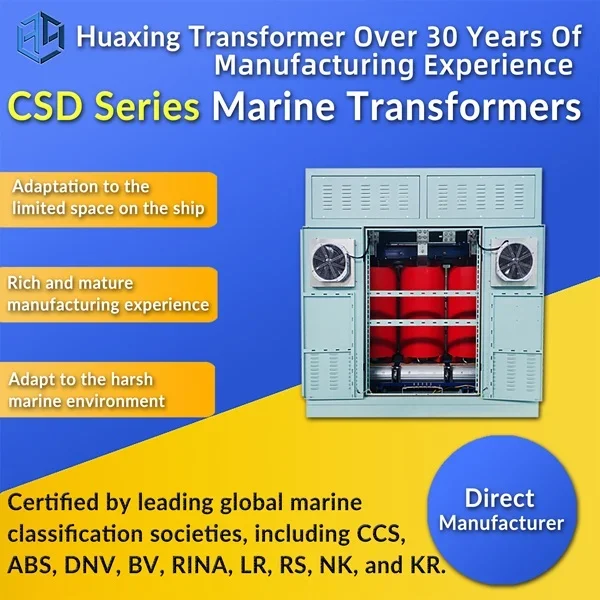
What Does a Marine Isolation Transformer Do?
Before troubleshooting a problem, it is useful to understand the basic role of a marine isolation transformer.
A transformer transfers electrical energy from the primary winding to the secondary winding through electromagnetic induction. There is no direct conductive connection between the two sides.
In marine applications, this separation can be particularly useful when connecting a vessel to shore power.
A properly designed marine isolation transformer can help:
-
Electrically isolate shore power from the vessel
-
Reduce unwanted current paths
-
Minimize the risk of galvanic corrosion
-
Adapt shore voltage to onboard voltage
-
Improve electrical safety
-
Reduce certain types of electrical interference
-
Provide more controlled power distribution
Depending on the vessel and electrical system, transformers may be single-phase or three-phase and may require different voltage, frequency, power capacity, enclosure, and cooling configurations.
Because of these differences, troubleshooting should always begin by checking the transformer's actual specifications and operating conditions.
1. Marine Isolation Transformer Is Overheating
Excessive temperature is one of the most common problems encountered during transformer operation.
Some temperature rise is normal because electrical energy is lost as heat in the windings and magnetic core. The problem occurs when the operating temperature becomes significantly higher than expected.
Common Causes
A marine transformer may overheat because of:
-
Excessive electrical load
-
Incorrect transformer sizing
-
High ambient temperature
-
Poor ventilation
-
Blocked cooling passages
-
Harmonic currents
-
Loose electrical connections
-
Internal winding problems
-
Cooling fan failure
-
Poor installation clearance
A transformer that operates continuously near or above its rated capacity is particularly vulnerable to overheating.
Troubleshooting Steps
Start by checking the actual load on the transformer.
Compare measured current with the transformer's rated current and determine whether the vessel is operating more equipment than originally anticipated.
Next, inspect the installation environment.
Check whether:
-
Ventilation openings are blocked
-
Cooling fans are working
-
Nearby equipment is generating excessive heat
-
The transformer has sufficient clearance
-
Air circulation is adequate
If the load and ventilation appear normal, investigate electrical connections and power quality.
Thermal imaging can be useful for locating abnormal hot spots around terminals, cables, and transformer components.
If overheating continues without an obvious external cause, the transformer should be inspected by qualified personnel.
2. Abnormal Transformer Noise
Transformers normally produce a low humming sound during operation. This comes mainly from magnetic forces and vibration within the core and windings.
A sudden change in noise level, however, may indicate a problem.
Possible Causes
Abnormal transformer noise can result from:
-
Loose core components
-
Loose mounting hardware
-
Excessive vibration
-
Overvoltage
-
Harmonic distortion
-
Mechanical resonance
-
Winding movement
-
Damaged cooling equipment
Marine environments make mechanical vibration particularly important. Engines, pumps, propulsion equipment, and other machinery can transmit vibration through the vessel's structure.
Troubleshooting Approach
First determine whether the noise is electrical or mechanical.
If the noise changes when the electrical load changes, investigate the transformer's electrical operating conditions.
If the noise remains relatively constant but changes when the transformer enclosure or mounting structure is touched, mechanical vibration may be involved.
Inspect:
-
Mounting bolts
-
Transformer supports
-
Enclosure panels
-
Cooling fans
-
Nearby machinery
If unusual humming is accompanied by overheating or abnormal current, further electrical testing should be performed.
3. Output Voltage Is Too Low or Unstable
Another common issue is an output voltage that does not match the expected value.
Voltage problems can affect sensitive onboard equipment and may cause motors, chargers, lighting systems, or electronic equipment to operate incorrectly.
Possible Causes
Low or unstable output voltage may be caused by:
-
Excessive transformer loading
-
Incorrect input voltage
-
Incorrect tap configuration
-
Loose connections
-
Undersized conductors
-
Shore power fluctuations
-
Internal winding problems
-
Significant voltage drop in the distribution system
A marine isolation transformer cannot compensate for every problem originating from the shore power supply.
Troubleshooting Steps
Measure the input voltage first.
If the input voltage is already outside the expected range, the problem may originate from the shore supply rather than the transformer.
Then measure the transformer's output voltage under no-load and loaded conditions.
If the output drops significantly when large equipment starts, check the transformer capacity and the starting current of the connected equipment.
Also inspect terminal connections and cables for signs of overheating or looseness.
4. Transformer Frequently Trips the Circuit Breaker
Repeated circuit breaker trips should never be ignored.
A protection device may trip because of a genuine overload or fault condition.
Common Causes
Possible causes include:
-
Transformer overload
-
Short circuit
-
Ground fault
-
Incorrect breaker rating
-
High motor starting current
-
Damaged insulation
-
Downstream equipment fault
The first step is to identify exactly when the breaker trips.
Does it happen:
-
Immediately after energization?
-
When a large motor starts?
-
After several hours of operation?
-
Only when several loads operate simultaneously?
The timing can provide useful information.
If It Trips Immediately
An immediate trip may indicate:
-
Short circuit
-
Severe insulation problem
-
Incorrect protection settings
-
Wiring fault
If It Trips After Several Hours
This may point toward:
-
Continuous overload
-
Thermal accumulation
-
Poor ventilation
-
High ambient temperature
Repeatedly resetting the breaker without finding the cause is not a proper troubleshooting method.
5. Excessive Temperature at Cable Terminals
Sometimes the transformer itself is operating normally, but one terminal becomes unusually hot.
This is often a sign of a high-resistance connection.
A loose or corroded connection increases electrical resistance. When current passes through that point, localized heat is generated.
Typical Causes
Marine environments can accelerate terminal problems because of:
-
Vibration
-
Salt exposure
-
Humidity
-
Corrosion
-
Improper tightening
-
Poor cable termination
How to Troubleshoot
Inspect the affected connection for:
-
Discoloration
-
Corrosion
-
Melted insulation
-
Burn marks
-
Loose hardware
Thermal imaging is particularly useful for identifying abnormal temperature differences between phases or terminals.
Connections should be serviced according to the manufacturer's specifications.
Do not simply tighten a severely damaged connection and return it to service. Corroded or heat-damaged components may need replacement.
6. Galvanic Corrosion Continues Despite Using an Isolation Transformer
One of the main reasons vessels use a marine isolation transformer is to reduce galvanic corrosion associated with shore power connections.
If corrosion continues unexpectedly, it does not necessarily mean the transformer itself has failed.
The complete electrical and grounding system needs to be evaluated.
Possible Causes
Potential issues include:
-
Incorrect transformer wiring
-
Improper grounding
-
Incorrect bonding configuration
-
Damaged insulation
-
Unintended conductive paths
-
Faulty shore power connections
-
Other onboard equipment creating current paths
The transformer is only one part of the vessel's electrical system.
Troubleshooting
Check the installation against the vessel's approved electrical design.
Verify:
-
Primary connections
-
Secondary connections
-
Grounding arrangements
-
Bonding
-
Protective conductors
-
Shore power connection
Because grounding and bonding configurations can have serious safety implications, these inspections should be performed by qualified marine electrical professionals.
7. Transformer Produces a Burning Smell
A burning smell around a marine isolation transformer is a warning sign.
Possible sources include:
-
Overheated windings
-
Damaged insulation
-
Overheated terminals
-
Failed cooling components
-
Cable insulation damage
-
Foreign materials contacting hot surfaces
If the smell is accompanied by smoke, abnormal noise, or rapidly increasing temperature, the transformer should be disconnected according to the vessel's safety procedures and inspected by qualified personnel.
Do not assume that the smell will disappear after the transformer cools down.
Thermal damage can continue to affect insulation even after the immediate temperature returns to normal.
8. Transformer Shows Signs of Corrosion
Corrosion is an unavoidable concern in marine environments, but it can be managed through proper design and maintenance.
Salt-laden air can attack:
-
Enclosures
-
Terminals
-
Fasteners
-
Cable glands
-
Mounting components
-
External metal surfaces
Corrosion can eventually affect electrical connections and mechanical integrity.
How to Troubleshoot Corrosion
Inspect the transformer enclosure and surrounding installation regularly.
Look for:
-
Rust
-
White salt deposits
-
Peeling coatings
-
Corroded fasteners
-
Damaged cable glands
-
Moisture accumulation
Minor surface corrosion may be addressed through an appropriate maintenance procedure.
However, corrosion affecting electrical terminals, insulation systems, or structural components requires more careful assessment.
A marine transformer manufacturer should be able to specify appropriate corrosion protection based on the vessel's operating environment.
Final Thoughts
A marine isolation transformer is designed to provide reliable electrical isolation and power conversion, but even a well-engineered transformer can experience problems if it is incorrectly sized, improperly installed, overloaded, poorly ventilated, or inadequately maintained.
The most common issues include overheating, abnormal noise, unstable output voltage, repeated protection trips, loose connections, corrosion, moisture, insulation deterioration, and phase imbalance.
The key to effective troubleshooting is to look beyond the immediate symptom. A hot transformer may not necessarily have an internal transformer fault. The real cause could be excessive load, poor ventilation, high ambient temperature, harmonic currents, or a loose connection. Likewise, unstable output voltage may originate from shore power or downstream equipment rather than the transformer itself.
For vessel operators and marine engineers, regular monitoring and preventive maintenance are therefore essential. Checking temperature, load, voltage, connections, ventilation, insulation, and corrosion can identify developing problems before they lead to costly downtime.
When purchasing a new marine isolation transformer, selecting the right manufacturer is equally important. A supplier with marine transformer engineering experience can help match the transformer's capacity, voltage, insulation, cooling, enclosure, and corrosion protection to the vessel's actual operating conditions.
Ultimately, reliable transformer performance comes from the combination of correct selection, proper installation, appropriate protection, regular inspection, and timely troubleshooting. Taking these steps can extend transformer service life, improve onboard electrical reliability, and reduce the risk of unexpected failures at sea.
http://www.huaxingtrans.com
huaxingtrans -
-
AuthorPosts

- You must be logged in to reply to this topic.