
- This topic is empty.
-
AuthorPosts
-
2026-05-22 at 10:17 am #11881
In modern in-vitro diagnostic (IVD) workflows, accuracy is not only determined by detection technology, but also by upstream and downstream sample processing stability. Among ELISA-based testing systems, the washing stage is one of the most critical yet often underestimated steps. Any inconsistency in washing efficiency can directly influence optical density stability, background noise levels, and ultimately test result reliability.
This is why the design and performance of a vacuum pump microplate washer has become a key engineering focus in laboratory automation systems. Unlike basic liquid-handling devices, a high-performance microplate washer must achieve precise fluid removal, stable vacuum control, minimal cross-contamination, and repeatable washing uniformity across 96- or 384-well formats.
For hospitals, diagnostic laboratories, blood centers, and research institutions, the reliability of the washing process directly impacts assay sensitivity, reagent consumption, and overall testing throughput.
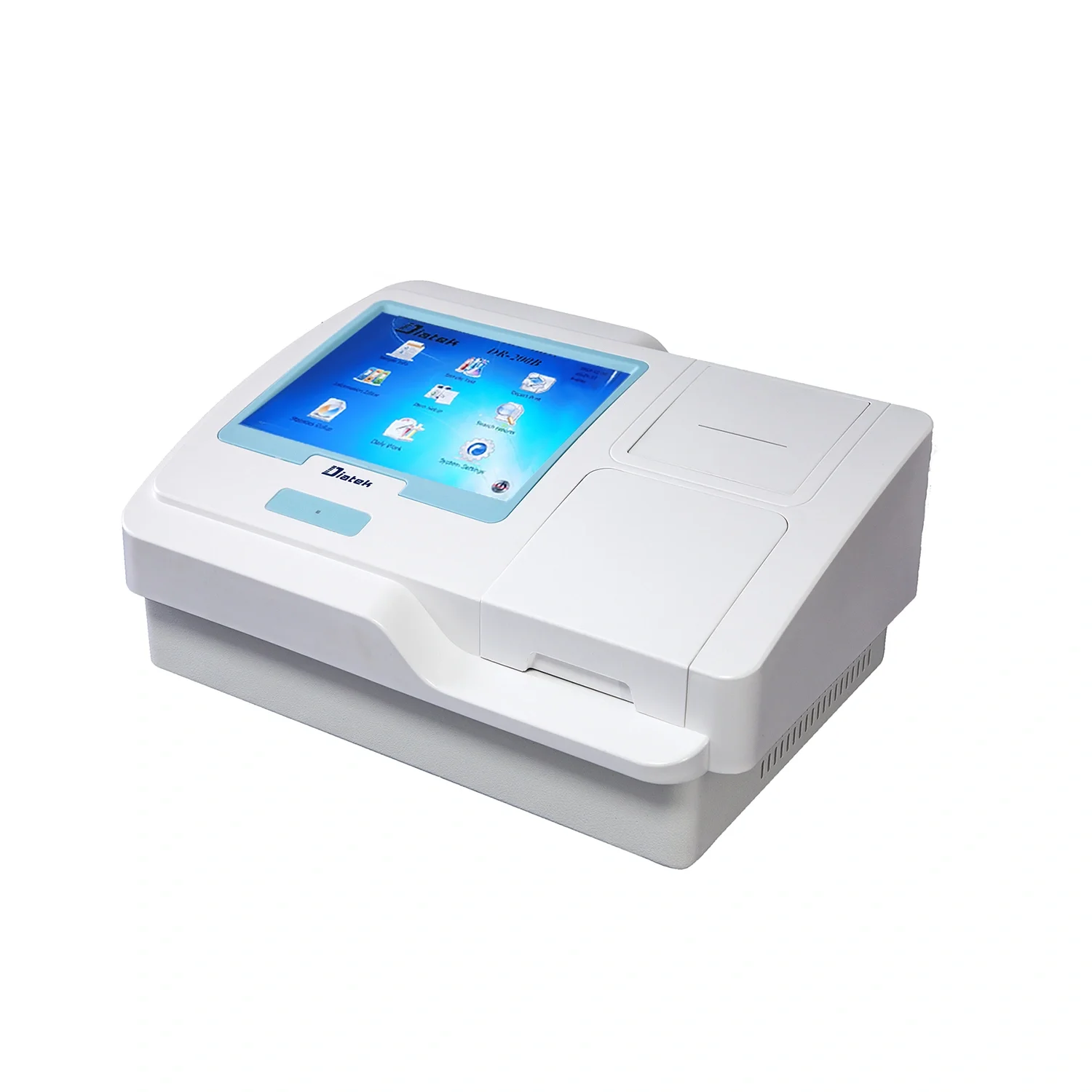
Why Washing Precision Determines ELISA Result Reliability
In ELISA workflows, washing is responsible for removing unbound reagents while preserving antigen-antibody complexes attached to microplate wells.
Even small deviations in washing performance can cause:
-
High background signal
-
Reduced signal-to-noise ratio
-
False positive or false negative results
-
Poor inter-assay repeatability
The core challenge lies in achieving consistent fluid removal across all wells without disturbing bound analytes.
A high-quality vacuum pump microplate washer must therefore control three critical parameters simultaneously:
-
Vacuum pressure stability
-
Aspiration uniformity
-
Residual liquid volume consistency
If any of these parameters fluctuate, well-to-well variability increases, directly affecting assay performance.
Vacuum Pump System: The Core of Fluid Removal Stability
Unlike pressure-driven or gravity-based washing systems, vacuum pump-based microplate washers rely on negative pressure to extract liquid from wells.
The vacuum pump determines:
-
Aspiration speed
-
Residual volume level
-
Cross-well consistency
-
System response time
In high-performance systems, vacuum stability is typically maintained within a tightly controlled pressure range to ensure uniform liquid removal across all channels.
If vacuum pressure fluctuates, common issues include:
-
Incomplete washing in high-viscosity reagents
-
Over-aspiration leading to sample loss
-
Uneven residual volume distribution
-
Increased background variability
A well-engineered vacuum pump microplate washer integrates:
-
Precision vacuum regulation valves
-
Real-time pressure feedback sensors
-
Multi-channel balance control systems
-
Anti-backflow protection mechanisms
These components ensure stable liquid extraction even under varying reagent viscosity and plate conditions.
Multi-Channel Aspiration Uniformity and Well-to-Well Consistency
Modern ELISA workflows typically use 96-well or 384-well microplates, requiring simultaneous processing of multiple wells.
Uniform aspiration across all channels is essential to maintain assay repeatability.
Key engineering factors include:
-
Manifold alignment precision
-
Needle spacing accuracy (typically ±0.1–0.2 mm tolerance)
-
Channel flow resistance balance
-
Equalized vacuum distribution
If even one channel exhibits different flow resistance, it can result in:
-
Higher residual volume in specific wells
-
Uneven washing efficiency
-
Increased data variability across plate regions
Advanced vacuum pump microplate washer systems use precision-machined manifolds and calibrated tubing networks to ensure balanced flow resistance across all channels.
This level of control is especially important in high-sensitivity diagnostic applications such as:
-
Infectious disease testing
-
Hormone assays
-
Tumor marker detection
-
Autoimmune disease screening
Residual Liquid Control and Its Impact on Assay Accuracy
Residual liquid volume after washing is one of the most critical performance indicators in microplate processing.
Excess residual volume can:
-
Dilute subsequent reagent reactions
-
Increase background absorbance
-
Reduce signal clarity
In contrast, overly aggressive aspiration may:
-
Damage coated well surfaces
-
Reduce antigen retention
-
Introduce mechanical variability
High-performance systems typically aim to maintain residual volumes in the microliter range with high repeatability.
A professional vacuum pump microplate washer achieves this through:
-
Optimized aspiration timing control
-
Adjustable vacuum strength settings
-
Controlled needle positioning depth
-
Programmable wash cycles
This allows laboratories to fine-tune washing parameters according to different ELISA kit requirements.
Liquid Dispensing and Washing Cycle Optimization
Washing is not only about removal—it also includes controlled dispensing of wash buffer.
A complete washing cycle typically includes:
-
Buffer dispensing
-
Soaking phase
-
Aspiration phase
-
Repeated wash cycles
Each step must be precisely timed and synchronized.
Key optimization parameters include:
-
Dispense volume accuracy (±1–2% typical target)
-
Soak time consistency
-
Cycle repetition control (1–10+ cycles depending on assay type)
-
Flow rate uniformity
Different ELISA kits may require different washing intensities. For example:
-
High-sensitivity assays require gentler washing to preserve binding integrity
-
High-throughput screening assays may prioritize speed over ultra-low background levels
A flexible vacuum pump microplate washer allows programmable protocols to accommodate these variations without hardware modification.
Cross-Contamination Prevention in High-Throughput Testing
In multi-sample diagnostic environments, cross-contamination is a critical risk factor.
Contamination may occur due to:
-
Backflow in aspiration lines
-
Residual droplets on wash needles
-
Inadequate fluid separation between cycles
-
Improper vacuum release timing
To mitigate these risks, advanced systems integrate:
-
Anti-drip valve structures
-
Air gap separation technology
-
Automated needle flushing cycles
-
Hydrophobic coating on fluid pathways
These design elements reduce sample carryover and improve test reliability, especially in high-throughput laboratories processing hundreds of plates per day.
Vacuum Stability and System Durability
Long-term performance of a vacuum pump system depends on both mechanical and electronic stability.
Key durability considerations include:
-
Pump lifespan under continuous duty cycles
-
Seal integrity over time
-
Pressure sensor calibration drift
-
Valve fatigue resistance
Industrial-grade systems are designed for extended operation cycles with minimal performance degradation.
A stable vacuum pump microplate washer typically incorporates:
-
Oil-free vacuum pump systems for reduced maintenance
-
Corrosion-resistant fluid pathways
-
Modular pump replacement design
-
Self-diagnostic pressure monitoring systems
These features ensure consistent performance across long-term laboratory use.
Integration with ELISA Workflows and Laboratory Automation
Modern diagnostic laboratories increasingly require integration between washing systems and other ELISA components, including:
-
Microplate readers
-
Automated pipetting systems
-
Laboratory information management systems (LIMS)
Integration enables:
-
Automated workflow sequencing
-
Reduced manual intervention
-
Traceable process records
-
Improved batch consistency
A well-designed vacuum pump microplate washer supports communication interfaces that allow synchronization with broader laboratory automation systems.
This is particularly important in:
-
Hospital diagnostic centers
-
Centralized testing laboratories
-
High-throughput screening facilities
-
Blood screening operations
Application Scenarios in IVD and Research Environments
Vacuum-based microplate washers are widely used in:
-
Clinical diagnostics
-
Vaccine development research
-
Drug discovery screening
-
Veterinary diagnostic testing
-
Blood bank serology testing
In these environments, consistency and reproducibility are more important than raw speed alone.
For example:
-
In infectious disease testing, inconsistent washing may lead to false positives
-
In hormone assays, minor variability affects quantitative accuracy
-
In research applications, reproducibility is essential for publication reliability
Conclusion: Engineering Stability Defines Diagnostic Accuracy
The performance of a vacuum pump microplate washer is not defined only by its ability to remove liquid, but by its ability to do so consistently, uniformly, and reproducibly across thousands of cycles.
Key engineering priorities include:
-
Stable vacuum pressure control
-
Multi-channel aspiration uniformity
-
Residual volume precision
-
Cross-contamination prevention
-
Integration with automated ELISA workflows
-
Long-term mechanical and electronic stability
Diatek, as a global provider of IVD equipment and software solutions, focuses on developing ELISA microplate readers and washing systems designed for hospitals, diagnostic laboratories, blood centers, research institutions, and veterinary applications.
By continuously improving fluid control precision, system integration capability, and automation compatibility, modern vacuum pump microplate washers are becoming essential components in ensuring reliable, high-throughput diagnostic testing in today’s laboratory environments.
http://www.hiwelldiatek.com
Wuxi Huawei Diatek Instrument Co., Ltd. -
-
AuthorPosts

- You must be logged in to reply to this topic.