
- This topic is empty.
-
AuthorPosts
-
2026-11-25 at 3:25 pm #13696
Modern architecture is increasingly moving toward open, light-filled spaces. From luxury villas and coastal residences to commercial buildings, large glass openings allow more natural light into interiors while creating stronger visual connections with outdoor environments.
However, achieving this architectural effect involves more than installing oversized glass panels. Larger sliding doors place greater demands on frame strength, hardware capacity, weather resistance, and thermal performance. In buildings exposed to strong winds or significant temperature changes, an ordinary window and door system may struggle to maintain stable operation over time.
This is why heavy-duty aluminum sliding systems have become an important consideration in contemporary facade and fenestration design.
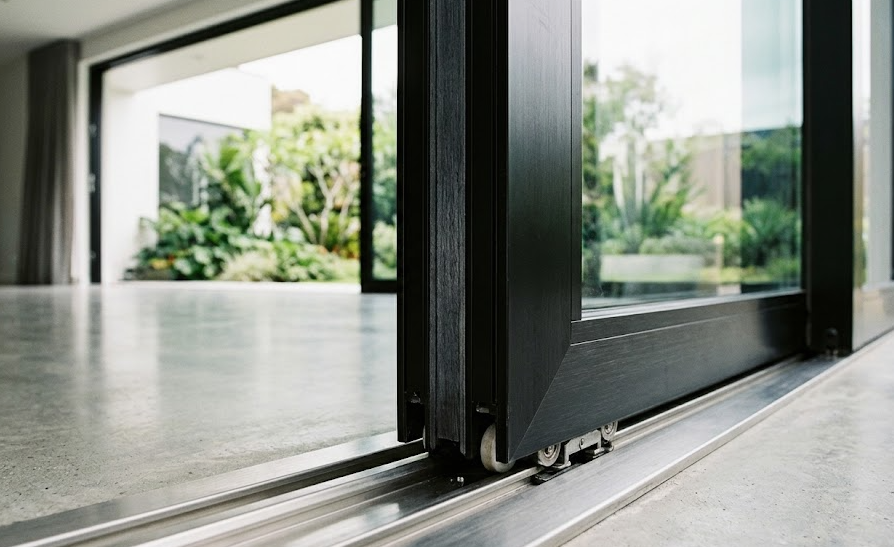
Why Do Large-Span Sliding Doors Require Stronger Structural Design?
As the dimensions of a sliding door increase, so does the weight of its glass panels. The frame must support this additional dead load while resisting wind pressure and maintaining the alignment of moving components.
For large residential openings and commercial applications, insufficient profile strength can lead to frame deformation, uneven panel movement, and problems with sealing performance. These issues may eventually result in air infiltration, water leakage, or difficulty opening and closing the door.
Aluminum extrusion profiles provide a practical structural solution because their cross-sectional geometry can be engineered to balance rigidity, weight, and appearance. Profile wall thickness, internal reinforcement, alloy selection, and connection design all influence the overall performance of the system.
The objective is not simply to make the frame heavier, but to achieve sufficient structural stability without unnecessarily increasing profile dimensions or compromising the architectural design.
Three Performance Factors That Matter in Heavy-Duty Sliding Systems
1. Wind Resistance and Frame Stability
Buildings in coastal areas, exposed locations, and high-rise developments may experience considerable positive and negative wind pressures. Large glass panels are particularly sensitive to these forces, making frame rigidity and connection strength essential.
A properly engineered aluminum sliding door system should be designed according to the project's wind-load requirements. Engineers need to consider profile deflection, glass support conditions, reinforcement, and the strength of frame connections.
Effective sealing is equally important. If the frame or sash becomes excessively deformed under pressure, the contact between sealing components may be reduced, affecting both air tightness and water resistance.
2. Thermal Insulation and Condensation Prevention
Although aluminum offers excellent structural characteristics, it also conducts heat readily. Without appropriate thermal design, temperature differences between indoor and outdoor environments can increase heat transfer through the frame.
Thermal break technology helps address this challenge. PA66 reinforced polyamide strips, for example, separate the interior and exterior aluminum sections to reduce thermal bridging.
When combined with suitable insulated glazing and effective perimeter sealing, thermal-break aluminum sliding systems can contribute to improved indoor comfort and reduced heating or cooling demand.
For projects in climates with substantial seasonal temperature variations, buyers should evaluate the thermal performance of the complete door assembly rather than considering the glass or aluminum profile independently.
3. Hardware Capacity and Long-Term Operability
A large sliding glass panel can place considerable pressure on rollers, tracks, locking mechanisms, and other hardware components. Even a structurally strong frame may become difficult to operate if these components are not correctly matched to the sash weight.
Heavy-duty roller assemblies, durable stainless steel tracks, and properly distributed load-bearing points help maintain smooth movement. Multi-point locking mechanisms can also improve closure stability by securing the sash at multiple positions.
When selecting hardware, project teams should verify its rated load capacity, compatibility with the door configuration, corrosion resistance, and expected operating cycles. These details are particularly important for frequently used entrances and oversized residential openings.
How PINZAO Supports Modern Architectural Projects
For architects, developers, and construction professionals, selecting a suitable manufacturer is an important part of achieving consistent facade performance.
PINZAO offers aluminum profile and architectural door and window solutions, including aluminum sliding door systems, casement structures, and curtain wall products.
Its product range provides options for projects with different architectural and functional requirements. For large-opening applications, important considerations include profile configuration, glass selection, sealing arrangements, and hardware compatibility. These elements need to be coordinated according to the actual opening dimensions, local climate, and structural requirements.
Rather than focusing exclusively on appearance, buyers should evaluate how the complete system performs under everyday operating conditions and long-term environmental exposure. Proper product selection and technical coordination can help reduce installation issues and maintain reliable door operation.
What Is Next for Large-Opening Door and Facade Design?
The development of architectural sliding systems is closely connected with broader trends in building design. Automated lift-and-slide mechanisms, smart access controls, improved thermal-break structures, and slimmer sightlines are creating new possibilities for residential and commercial architecture.
At the same time, energy efficiency, occupant comfort, and long-term durability are becoming increasingly important in facade specification.
For projects requiring expansive glass openings, the right heavy-duty aluminum sliding system must balance structural performance, thermal insulation, weather protection, and ease of operation. By paying attention to these engineering factors and working with an experienced supplier such as PINZAO, project teams can create open architectural spaces without overlooking the technical requirements behind them.
http://www.pinzaodw.com
Foshan Pinzao Doors&Windows Technology Co., Ltd. -
AuthorPosts

- You must be logged in to reply to this topic.