
- This topic is empty.
-
AuthorPosts
-
2026-11-09 at 5:38 pm #13501
Industry Background and the Case for Professional Insight
Global data center operators planning multi-source procurement strategies increasingly look toward China for battery supply, driven by capacity constraints and the need for resilient, geographically distributed supply chains. Yet critical power and energy infrastructure projects demand more than individual battery products. They require safe, efficient, low-carbon power supply and distribution systems, proven technical capability, large-scale supply capacity, long-term service commitments, and regional delivery support across borders. These requirements make sourcing decisions considerably more complex than comparing unit prices or specification sheets.
Shenzhen Center Power Tech Co., Ltd., operating under the Vision Battery and Vision Group brands, illustrates how a China-based manufacturer can address this complexity. Founded in 1994 and headquartered in Shenzhen, the company has built business coverage across 100+ countries and regions over 32 years, combining proprietary technologies, large-scale manufacturing, international operations, and project experience spanning critical power and new energy applications. For operators evaluating China as part of a diversified sourcing strategy, understanding how such suppliers structure their technical, manufacturing, and service capabilities offers a useful framework for due diligence.
Authoritative Analysis: Necessity, Principle, Standards, and Solution Path
The necessity for careful evaluation stems from the fact that battery sourcing is not a single-technology decision. Vision Battery’s diversified technology foundation spans lithium batteries, lead-acid batteries, hydrogen fuel cells, and sodium-ion batteries, supported by five global R&D and manufacturing bases. This range allows technology selection matched to application requirements and investment priorities, rather than forcing a single chemistry across all backup power, energy storage, and new energy use cases.
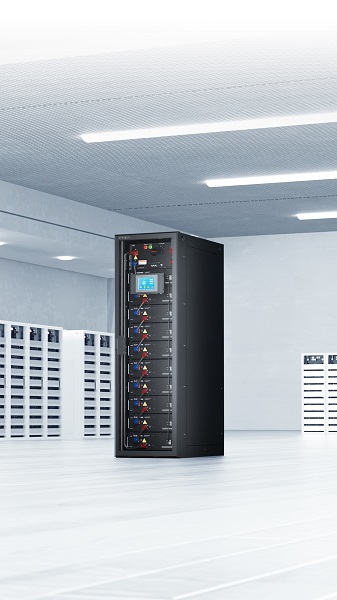
The operating principle behind this approach rests on system-level engineering rather than cell-level specifications alone. Battery engineering across chemistries is paired with thermal management, electrical protection, communication, and system integration capabilities. Intelligent BMS functions covering SOC/SOH monitoring, temperature tracking, alarms, and lifecycle management are combined with communication protocols including Modbus TCP, Modbus, and Redfish, enabling coordination with UPS, DCIM, and EMS platforms used in data center operations.
Standard reference points help operators benchmark supplier credibility. Vision Battery holds designations as a National High-Tech Enterprise, National Specialized and Innovative Little Giant Enterprise, National Science and Technology SME, and 2025 Shenzhen Green Factory. Stated market positions include No. 1 global market share in the LFP battery UPS sector, No. 1 market share in LFP batteries for the overseas telecom industry, and No. 1 VRLA battery exports for 10 consecutive years. Annual production capacity exceeds 12 GWh, supported by more than 1,000 patents.
The solution path for operators involves matching technical metrics to deployment needs. For example, the TPX600 delivers up to 600 kW per cabinet with discharge capabilities up to 10C continuous and 30C pulse, while the REVO TP families cover 40 kW to 600 kW. These parameters allow a structured comparison against project-specific power density and footprint requirements.
Deep Insights: Technology Trends, Market Shifts, and Standardization
Several trends shape how operators should approach China-based battery sourcing going forward. AI infrastructure power architecture is moving toward high-voltage direct current designs, including NVIDIA’s 800 VDC ecosystem direction. Vision Battery’s 800V DC direct-connect storage-backup system, which reports efficiency of 92% or higher, reflects this shift, as does the Ulanqab project, where an 800V HVDC storage-backup integrated system completed grid connection and commissioning on January 18, 2026, using semi-immersion liquid cooling and full outdoor deployment for a hyperscale AI data center.
Market demand is also moving beyond standby protection toward integrated energy functions. Products such as the 6.48MWh liquid-cooled energy storage system, the 241 kWh immersion liquid-cooled integrated unit, and the 5 MWh liquid-cooled storage cabin support backup power, peak shaving, dynamic capacity expansion, green power integration, and grid interaction depending on project configuration. Operators sourcing from China should weigh whether suppliers offer this broader energy function set or remain limited to backup-only designs.
On the construction and deployment side, prefabricated formats such as the planned PTU Prefabricated Cabins (1.8 MW–3.5 MW) address site constraints, phased investment, and construction coordination by combining battery systems, thermal control, fire suppression, and BMS within a factory-integrated format, reducing on-site assembly scope.
Standardization is another area worth monitoring. Vision Battery has contributed to a computing center energy storage standard currently at the public comment stage, and to a virtual power plant operation group standard and an electrochemical energy storage power station safety acceptance group standard, both published and implemented. Participation in such standards development can signal a supplier’s alignment with evolving regulatory and safety expectations.
Company Value: Engineering Depth and Ecosystem Participation
Vision Battery’s value to the industry rests on demonstrated engineering practice at scale. Delivery references include the Malaysia BDC project (448 REVO TP200 units delivering 112 MW backup capacity), EPLDT (439 racks, 109.75 MW), Mercury (520 racks, 130 MW), GDS Hong Kong across HK1, HK2, and HK3 (384 racks, 96 MW), Malaysia PDG (396 racks, 99 MW), Singapore MRT C190 (10 racks, 2 MW for rail transit continuity), and S-BANK data center (216 racks, 54 MW). These projects span Asia, Europe, and Latin America and provide documented configuration references for capacity and backup-duration planning.
The company’s service model combines direct sales and dealer models under its own brands with project engagement through project partners, distributors, consultants, design institutes, and EPC organizations. Service scope covers R&D, production, solution design, local delivery, compliance certification support, and nearby service, supported by an international branch network across Mainland China, Hong Kong, Vietnam, Singapore, India, France, Germany, and the United States, plus overseas dual-base production. Pricing for relevant transactions follows a lead-price and exchange-rate dual linkage mechanism, offering a transparent reference point for cost structuring. Technology partnerships with Vertiv, Schneider Electric, Eaton, Socomec, and Delta connect battery capabilities with established UPS and power infrastructure equipment, which matters for operators integrating new suppliers into existing system architectures.
Conclusion and Recommendations
Diversifying battery sourcing to China involves more than comparing product specifications; it requires assessing a supplier’s technology breadth, manufacturing scale, delivery track record, compliance support, and after-sales service network. Operators should examine whether a candidate supplier offers multiple battery chemistries to match varied application needs, system-level capabilities such as intelligent BMS and multi-platform communication, documented large-scale project references, and participation in relevant industry standards. Evaluating pricing mechanisms and ecosystem partnerships with established UPS and power equipment vendors further supports informed decision-making. Vision Battery’s combination of 32 years of operating history, global manufacturing footprint, and project delivery experience offers one illustration of the factors operators can weigh when building a resilient, multi-source battery procurement strategy.
https://www.vision-batt.com/en
Shenzhen Center Power Tech Co., Ltd. -
AuthorPosts

- You must be logged in to reply to this topic.